
This medicinal product has been authorised under a 'conditional approval' scheme. This means that further evidence on this medicinal product is awaited.
LOTIS-2: Haematological and laboratory TEAEs were generally manageable and reversible1
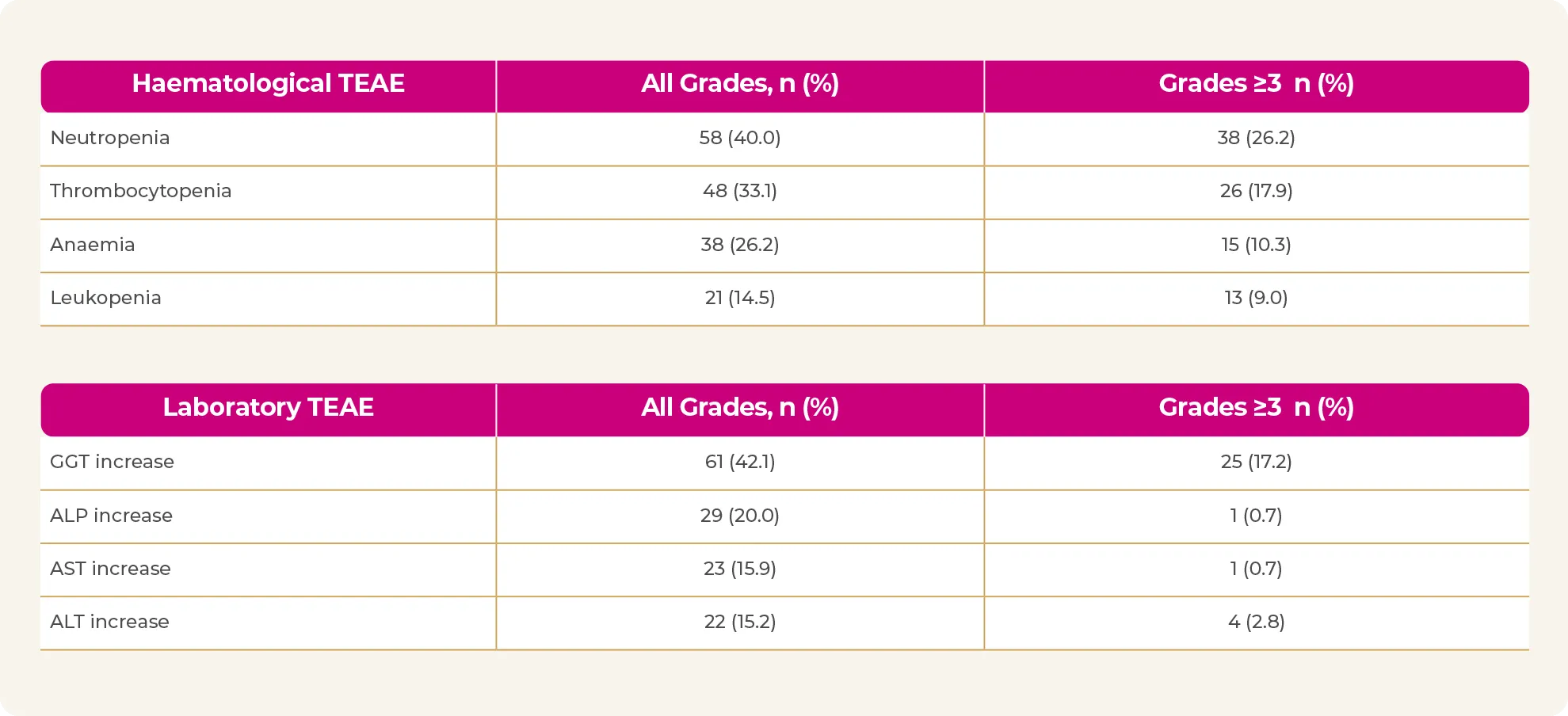
- Haematological parameters tended to partially recover between ZYNLONTA cycles2
- The most common Grade 3 or higher AEs were neutropenia, thrombocytopenia and increased GGT levels2
- Increased GGT levels was not associated with any severe hepatic events2
- Dose reductions due to ZYNLONTA AEs occurred in 8% of patients2
- More than half of dose reductions (≥4%) were due to increased GGT levels2
- Dose modifications or interruptions due to an AE occurred in 47% of patients3
- AEs leading to dose delay in ≥5% of patients were neutropenia, thrombocytopenia and increased GGT levels3
- Most patients (55%) were ≥65 years of age. No overall differences in safety or efficacy were observed between older (>65 years) and younger patients2
Dose delays were mostly short (<1 week) and enabled patients to continue with ZYNLONTA2
See SmPC for full safety information
▼This medicine is subject to additional monitoring. This will allow quick identification of new safety information. Healthcare professionals are asked to report any suspected adverse reactions. Adverse events should be reported. Reporting forms and information can be found at www.mhra.gov.uk/yellowcard or search for MHRA Yellow Card in the Google Play or Apple App Store. Adverse events should also be reported to Swedish Orphan Biovitrum Ltd by email at [email protected] or by calling +44 (0) 800 111 4754.