


Paediatric (N=30), adolescent and adult PTPs (N=123)1,2
- No inhibitor development*
- No vascular thrombotic events†
- No anaphylaxis or hypersensitivity‡
PUPs <18 years of age (N=33)4
- No high-titre inhibitors were reported
- The incidence of inhibitor formation (95% CI) was 3.57% (0.09–18.35) at ≥10 EDs (n=28), 3.70% (0.09–18.97) at ≥20 EDs (n=27) and 4.55% (0.12–22.84) at ≥50 EDs (n=22)§
- One patient (3.03% [95% CI: 0.08–15.76]) receiving prophylaxis developed a low-titre inhibitor (≥0.60 to <5.0 BU/mL) after 11 EDs, as well as serious hypersensitivity which resulted in withdrawal from the study
Supporting footnotes:
*Inhibitors have been detected in the post-marketing setting and PUPs. Patients using ALPROLIX should be monitored for the development of neutralising antibodies (inhibitors).7,8 †There is a potential risk of thromboembolic episodes following the administration of FIX products, with a higher risk for low-purity preparations.7,8 ‡Hypersensitivity or allergic reactions have been observed rarely in a post-marketing setting and may in some cases progress to severe anaphylaxis (including shock).7,8 §The incidence of inhibitors with ALPROLIX prophylaxis at 50 EDs was consistent with historical rates of inhibitor development in haemophilia B.4,9
Reinforced by up to 6.5 years' cumulative clinical experience in previously treated patients,5 and supported by >10 years of real-world experience6
B-LONG study design Kids B-LONG study design pups B-LONG study design
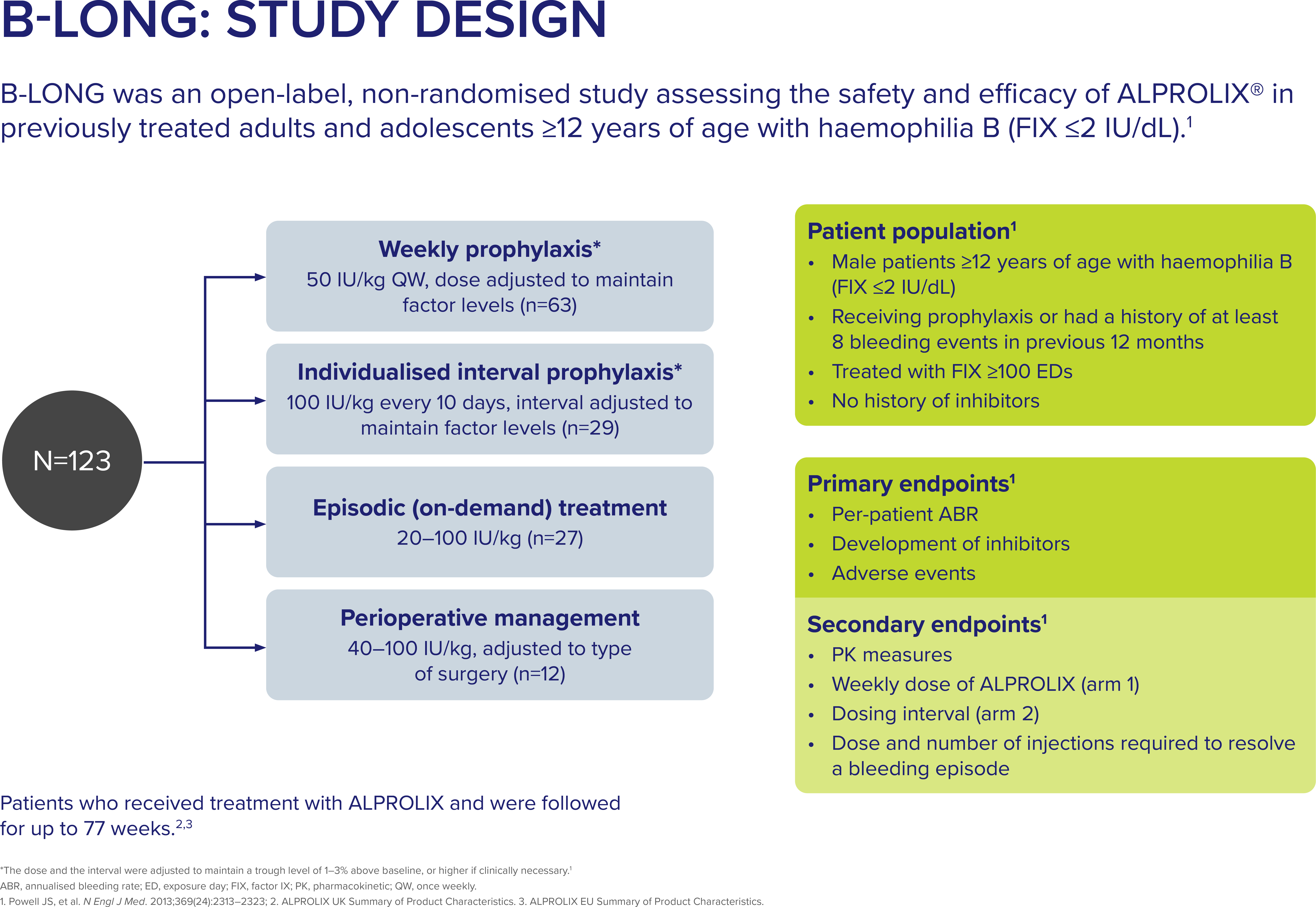
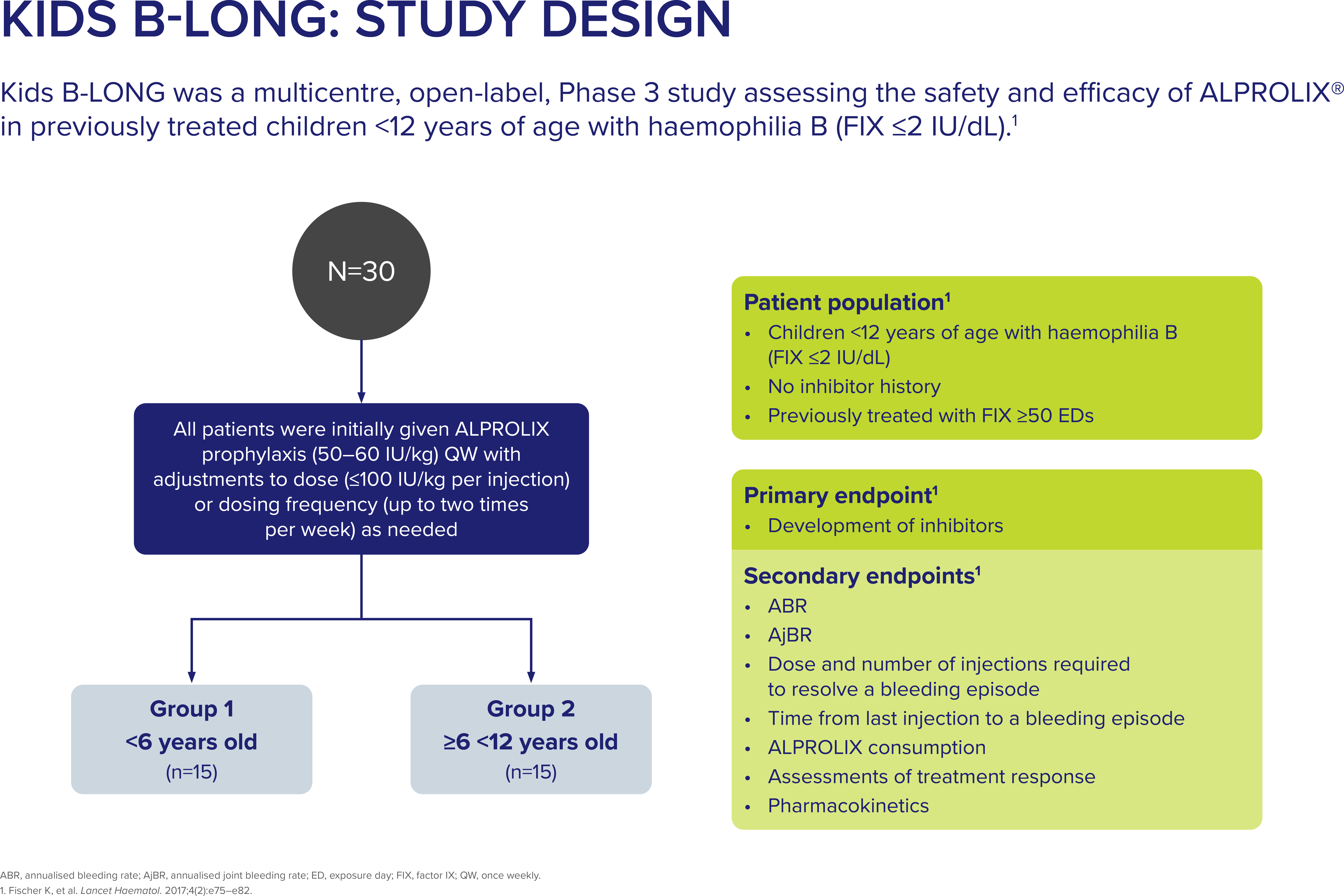
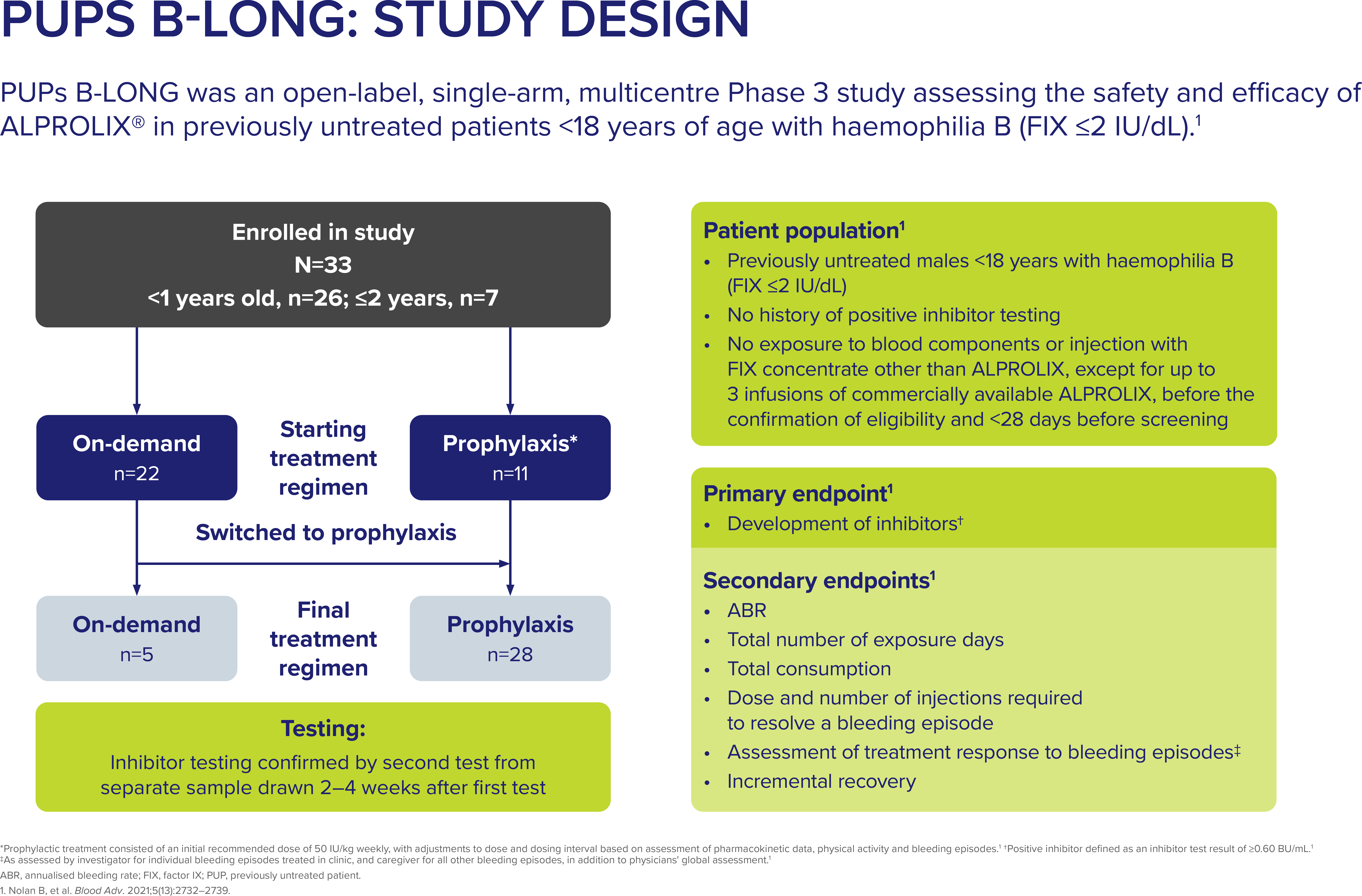
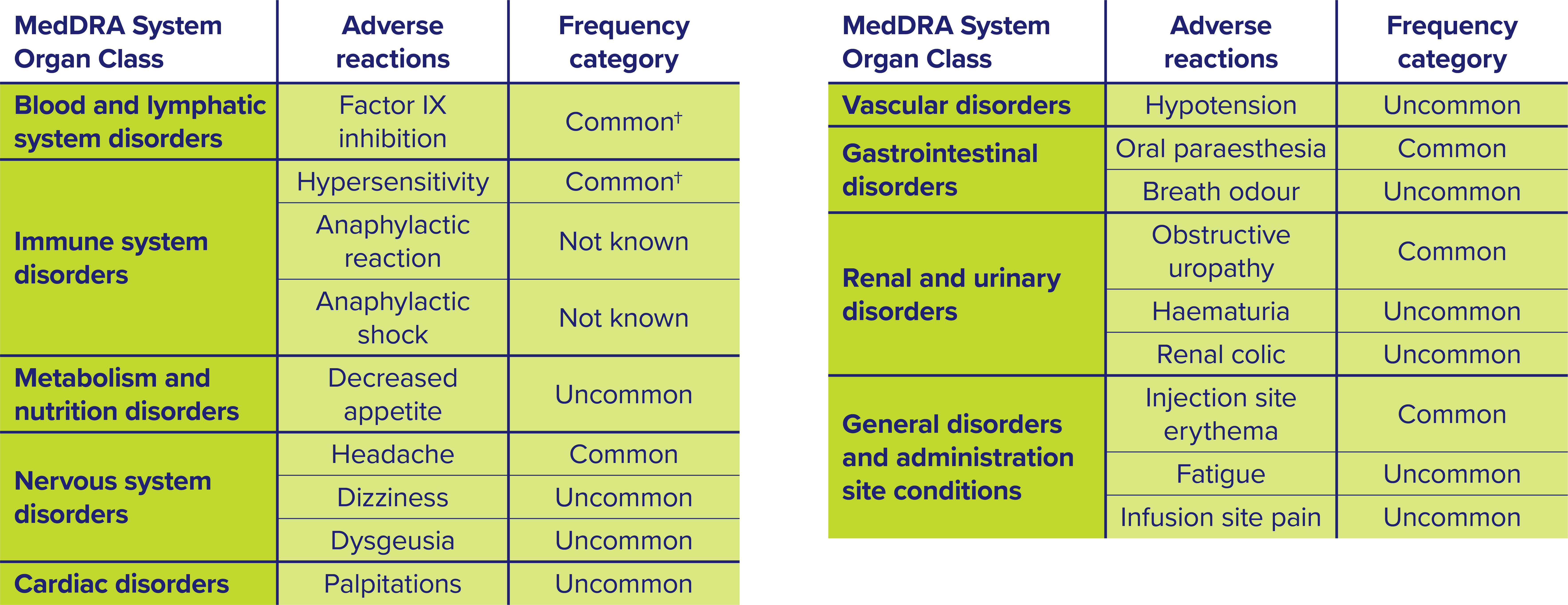
Frequency of adverable listing adverse reactions to factor IX inhibition, including their frequency categories.se reactions with ALPROLIX
The following data are derived from clinical studies (a total of 186 patients with severe haemophilia B, of which 153 were PTPs and 33 were PUPs)* and post-marketing use.7,8
Supporting footnotes:
Paediatric population: Frequency, type and severity of adverse reactions in children are expected to be similar as in adults.7,8
*PTPs: Adverse events were monitored for a total of 561 subject-years. The total number of exposure days was 26,106 with a median of 165 (range 1 to 528) exposure days per subject. PUPs: Adverse events were monitored for a total of 57.51 subject-years. The total number of exposure days was 2,233 with a median of 76 (range 1 to 137) exposure days per subject.7,8 †Frequency calculations based on occurrence in PUPs study. Both events of factor IX inhibition and hypersensitivity occurred in a single PUP in Study IV. See description of selected adverse reactions in the SmPC. Common (≥1/100 to <1/10); uncommon (≥1/1,000 to <1/100); not known (cannot be estimated from the available data).7,8
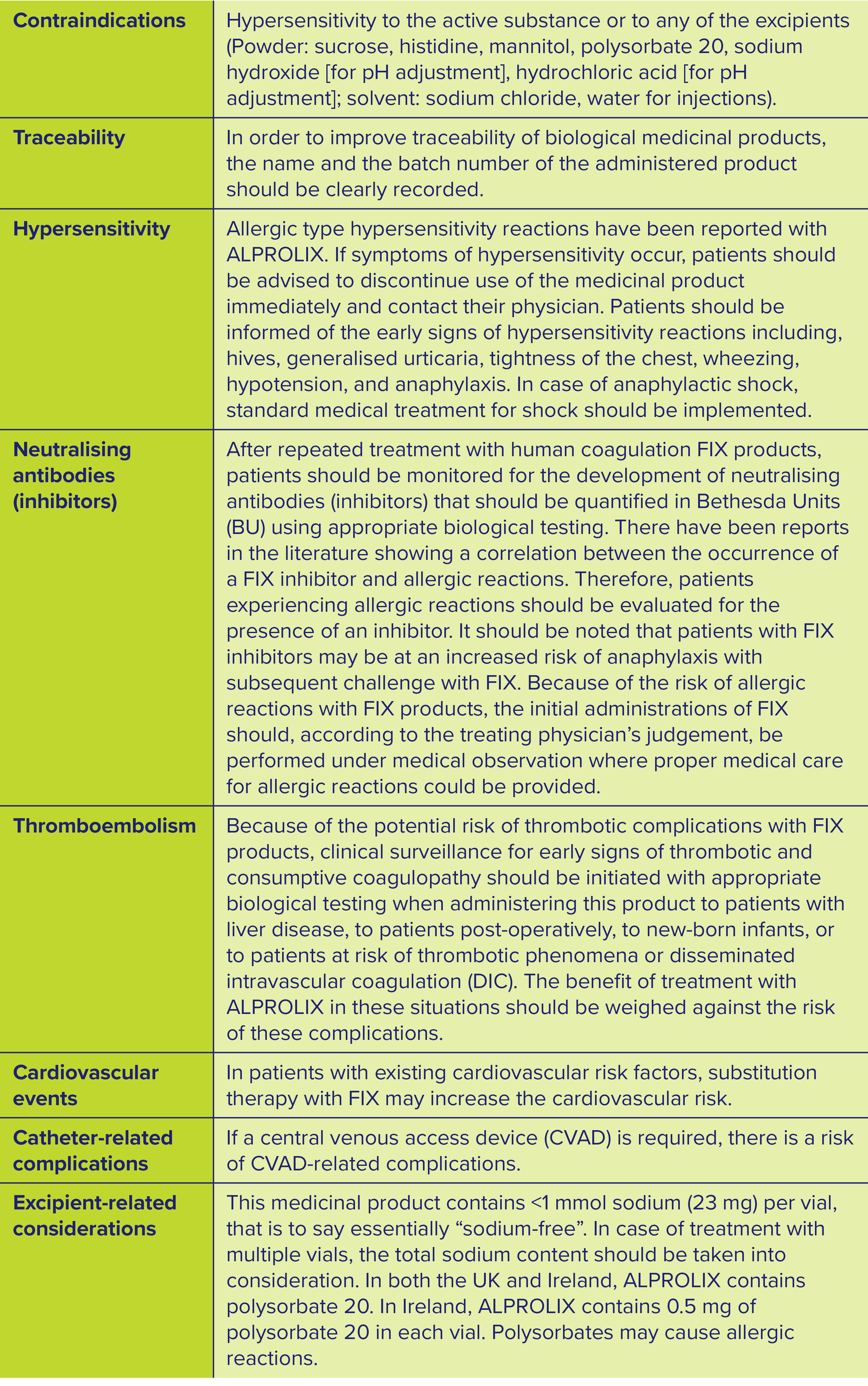
ALPROLIX special warnings and precautions
The listed warnings and precautions apply both to adults and children.7,8
For complete safety information please refer to the ALPROLIX Summary of Product Characteristics.

ED, exposure day; Cl, confidence interval; FIX, factor IX; MedDRA, Medical Dictionary for Regulatory Activities; PTP, previously treated patient; PUP, previously untreated patient.
References
1. Fischer K, et al. Lancet Haematol. 2017;4(2):e75–e82. 2. Powell JS, et al. N Engl J Med. 2013;369(24):2313–2323. 3. Pasi KJ, et al. Haemophilia. 2020;26(6):e262–e271. 4. Nolan B, et al. Blood Adv. 2021;5(13):2723–2739. 5. Shapiro A, et al. Blood Adv. 2023;7(13):3049–3057. 6. ALPROLIX Package Insert. FDA. Revised May 2023. 7. ALPROLIX UK Summary of Product Characteristics. 8. ALPROLIX EU Summary of Product Characteristics. 9. Giangrande PLF, et al. Orphanet J Rare Dis. 2018;13(1):66.
ALPROLIX is indicated for the treatment and prophylaxis of bleeding in patients with haemophilia B (congenital factor IX deficiency). ALPROLIX can be used for all age groups.7,8
| Adverse events should be reported. Reporting forms and information can be found, for United Kingdom: via the Yellow Card Scheme at www.mhra.gov.uk/yellowcard or search for MHRA Yellow Card in the Google Play or Apple App Store. For Ireland: via HPRA Pharmacovigilance website www.hpra.ie. Adverse events should also be reported to Swedish Orphan Biovitrum Ltd by email at [email protected] or by calling +44 (0) 800 111 4754. |