

XTEND-Kids study design
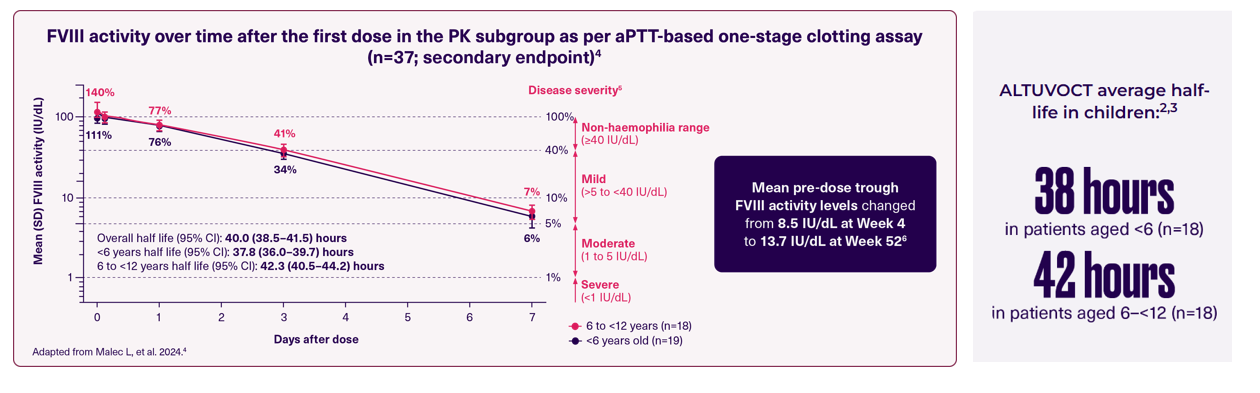
XTEND-1 was an open-label, multicentre, Phase 3 study of ALTUVOCT in previously treated children (<12 years old) with severe haemophilia A (N=74).4,7
Explore XTEND-Kids Study Design
XTEND-ed study design
Participants who completed XTEND-Kids were eligible to enrol into the XTEND-ed study (n=71).8,9
ALTUVOCT delivered effective bleed protection in children with haemophilia A4
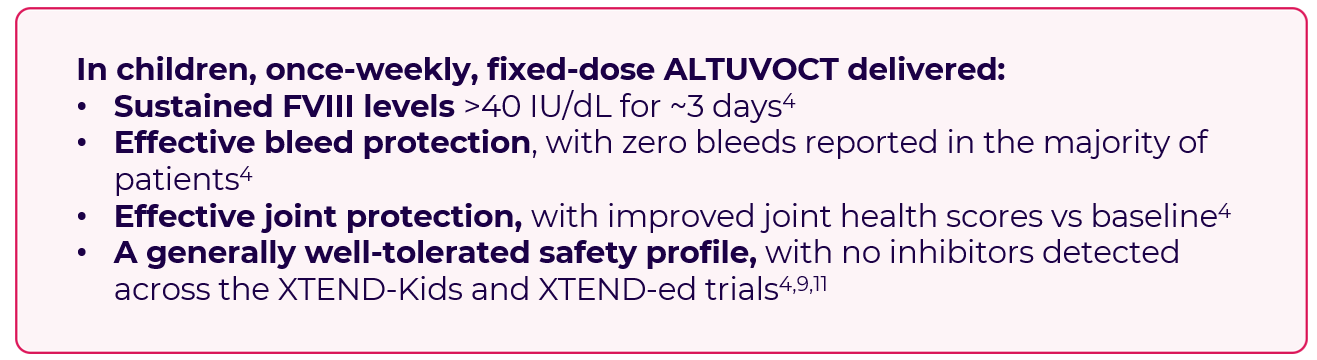
Over 52 weeks of once-weekly, fixed-dose ALTUVOCT prophylaxis in previously treated children with haemophilia A in the XTEND-Kids trial:4
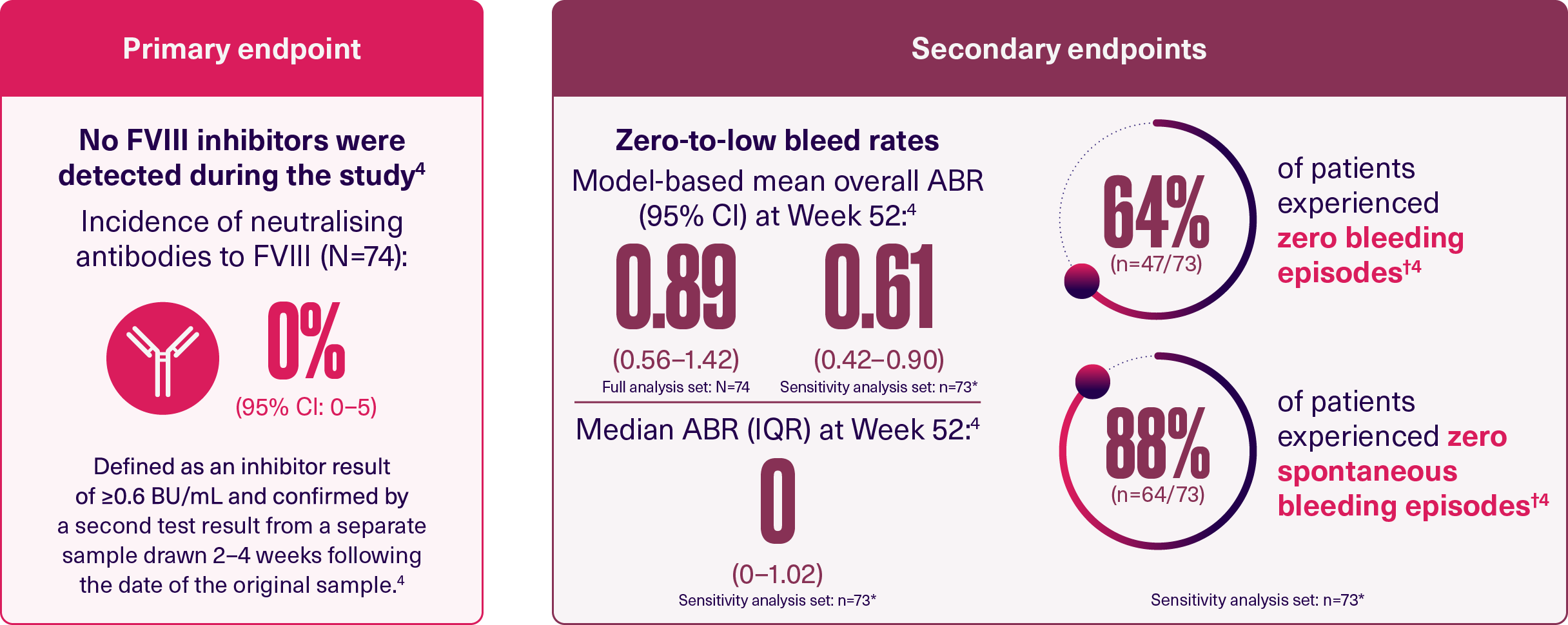
*An ad hoc sensitivity analysis was performed and included 73 patients who were treated according to protocol. One patient was excluded from the sensitivity analysis due to the return of a positive baseline FVIII inhibitor result after the patient had initiated treatment. The patient was subsequently withdrawn from the study after receiving three doses.4 †Bleeding episodes are reported for the sensitivity analysis set (n=73).4
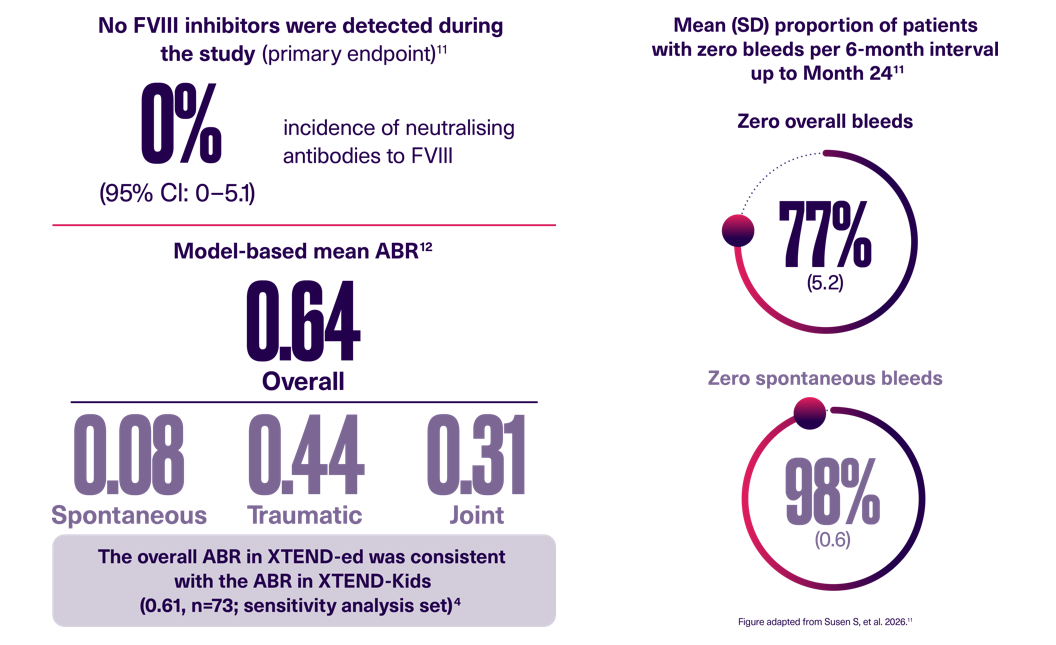
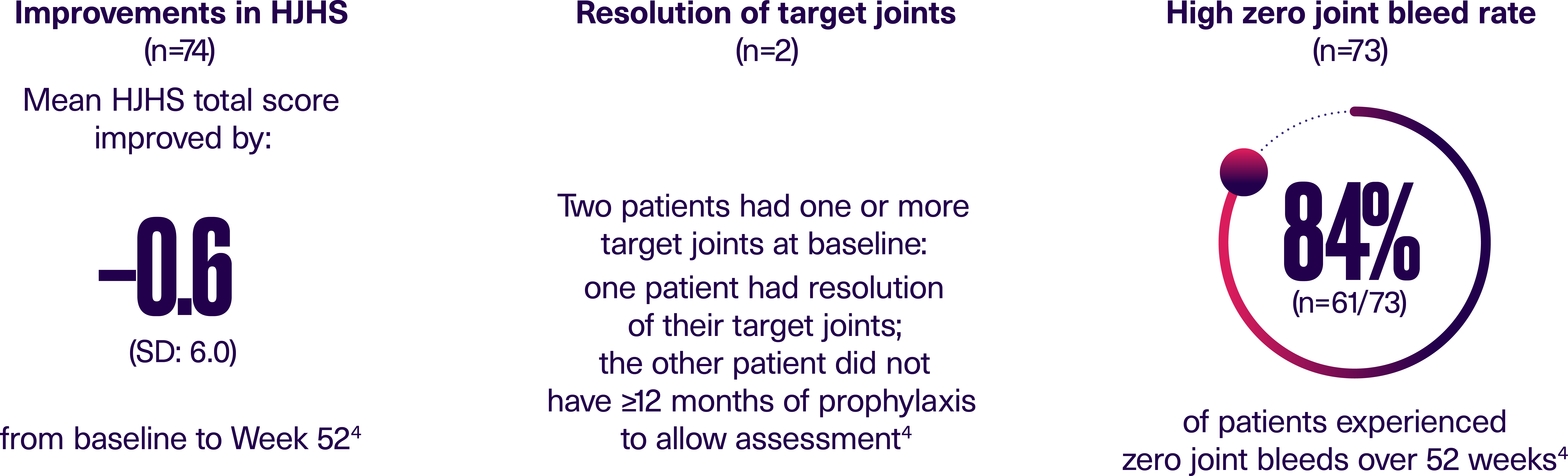
A lower HJHS score indicates better joint health. A target joint was defined as a major joint with at least three spontaneous bleeding episodes in a consecutive 6-month period before study entry. Target joint resolution was assessed according to ISTH criteria at Week 52,4 defined as ≤2 bleeding episodes in the target joint over 12 months of continuous exposure.13
ALTUVOCT can be used as a monotherapy for the treatment of acute bleeds and in the surgery setting2,3
Over 52 weeks in the XTEND-Kids trial, a single dose of ALTUVOCT resolved:4
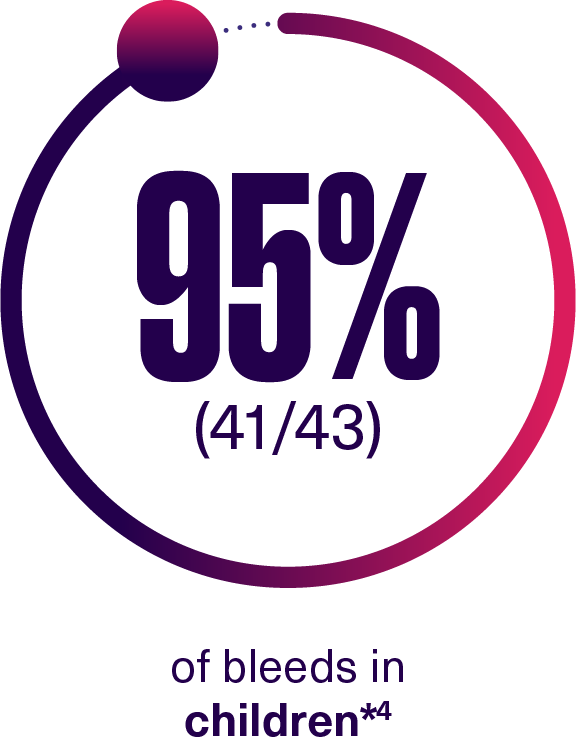
With excellent or good haemostatic response in 97% (36/37) of first evaluable injections in children.†4
*Data reported are from the ad hoc sensitivity analysis population (n=73) who were treated according to the protocol.4 †Assessment of response to ALTUVOCT treatment of individual bleeding episodes based on the ISTH 4-point response scale.4
In the perioperative setting (XTEND-Kids):14
Two patients underwent one major surgery (on 50 IU/kg perioperative loading dose, plus 30 IU/kg or 50 IU/kg every 2–3 days, as needed).
One treatment-emergent AE was reported for each patient, occurring on the day of surgery or in the postoperative period; both were unrelated to ALTUVOCT.

*Haematochezia, alanine aminotransferase increase, aspartate aminotransferase increase, FVIII level increase, vWF antigen increase.4
In the ongoing XTEND-ed study, ALTUVOCT continued to demonstrate a generally-well tolerated safety profile in children (n=71):9,11

Frequency of adverse reactions with ALTUVOCT
| MedDRA System organ class2,3 | Adverse reactions2,3 | Frequency2,3 |
| Blood and lymphatic system disorders | Factor VIII inhibition* | Very common (PUPs)†, Uncommon (PTPs)‡ |
| Immune system disorders | Hypersensitivity, anaphylactic reactions* | Not known |
| Nervous system disorders | Headache§ | Very common |
| Gastrointestinal disorders | Vomiting | Common |
| Skin and subcutaneous tissue disorders | Eczema Rash¶ Urticaria¥ | Common Common Common |
| Musculoskeletal and connective tissue disorders | Arthralgia Pain in extremity Back pain | Very common Common Common |
| General disorders & administration site conditions | Pyrexia Injection site reaction** | Common Uncommon |
Very common (≥1/10); common (≥1/100 to <1 /10); uncommon (≥1/1000 to <1/100); not known (cannot be estimated from the available data).2,3
No age-specific differences in adverse reactions were observed between paediatric and adult patients.2,3
For complete safety information, please refer to the SmPC.
*Reported in post-marketing setting.2,3 †Frequency is based on studies with other factor VIII products which included PUPs with severe haemophilia A.2,3 ‡Frequency is based on studies with all factor VIII products which included PTPs with severe haemophilia A.2,3 §Including migraine.2,3 ¶Including rash maculo papular.2,3 ¥Including urticaria papular.2,3 **Including injection site haematoma and injection site dermatitis.2,3
ALTUVOCT special warnings and precautions
| Hypersensitivity2,3 | Allergic type hypersensitivity reactions, including anaphylactic reactions have been observed with ALTUVOCT. If symptoms of hypersensitivity occur, patients should be advised to discontinue use of the medicinal product immediately and contact their physician. Patients should be informed of the early signs of hypersensitivity reactions including hives, generalised urticaria, itching, nausea, vomiting, tightness of the chest, wheezing, hypotension, and anaphylaxis. In case of shock, standard medical treatment for shock should be implemented. |
| Inhibitors2,3 | The formation of neutralising antibodies (inhibitors) to factor VIII is a known complication in the management of individuals with haemophilia A. These inhibitors are usually IgG immunoglobulins directed against the factor VIII pro-coagulant activity, which are quantified in Bethesda Units (BU) per mL of plasma using the modified assay. The risk of developing inhibitors is correlated to the severity of the disease as well as the exposure to factor VIII, this risk being highest within the first 50 exposure days but continues throughout life although the risk is uncommon. The clinical relevance of inhibitor development will depend on the titre of the inhibitor, with low titres posing less of a risk of insufficient clinical response than high titre inhibitors. In general, all patients treated with coagulation factor VIII products should be carefully monitored for the development of inhibitors by appropriate clinical observations and laboratory tests. If the expected factor VIII activity plasma levels are not attained, or if bleeding is not controlled with an appropriate dose, testing for factor VIII inhibitor presence should be performed. In patients with high levels of inhibitor, factor VIII therapy may not be effective and other therapeutic options should be considered. Management of such patients should be directed by physicians with experience in the care of haemophilia and factor VIII inhibitors. |
| Monitoring laboratory events2,3 | If the chromogenic assay or the one-stage clotting assay with Actin-FS reagent are used, divide the result by 2.5 to approximate the patient’s factor VIII activity level. Of note , this conversion factor only represents an estimate (mean chromogenic assay/one-stage clotting assay Actin-FSL ratio: 2.53; SD: 1.54; Q1: 1.98; Q3: 2.96 ; N= 3 353). |
| Cardiovascular events2,3 | In patients with existing cardiovascular risk factors, substitution therapy with factor VIII may increase the cardiovascular risk. |
| Catheter-related complications2,3 | If a central venous access device (CVAD) is required, risk of CVAD-related complications including local infections, bacteraemia and catheter site thrombosis should be considered. |
For complete safety information, please refer to the SmPC.
The listed warnings and precautions apply to both adults and children.2,3
There is limited experience in patients ≥65 years.2,3
ABR, annualised bleeding rate; AE, adverse event; aPTT, activated thromboplastin time; CI, confidence interval; COVID-19, coronavirus disease 2019; ED, exposure day; FVIII, factor VIII; HJHS, Haemophilia Joint Health Score; IQR, interquartile range; ISTH, International Society on Thrombosis and Haemostasis; PK, pharmacokinetic; RTI, respiratory tract infection; SAE, serious adverse event; SD, standard deviation; vWF, von Willebrand factor.
1. Malec L, Matino D. Haemophilia. 2023;29(6):1419–1429. 2. ALTUVOCT UK Summary of Product Characteristics. 3. ALTUVOCT EU Summary of Product Characteristics. 4. Malec L, et al. N Engl J Med. 2024;391:235–246. 5. Srivastava A, et al. Haemophilia. 2020;26 Suppl. 1–158. 6. Peyvandi F, et al. Blood. 2023;142(Suppl 1):506. 7. Malec L, et al. N Engl J Med. 2024;391:235–246(Suppl). 8. Klamroth R, et al. ASH 2024. San Diego, USA. Oral presentation. 9. Malec L, et al. Blood. 2024;5495–5496. 10. Klamroth R, et al. Blood. 2024;717–718. 11. Susen S, et al. EAHAD 2026. Dublin, Ireland. Oral presentation. 12. Susen S, et al. ASH 2025. Orlando, FL, USA. Oral presentation. 13. Konigs C, et al. ISTH 2025. Washington, D.C., USA. PB1425. 14. Klamroth R, et al. Haemophilia. 2025;0:1–10.
In the UK, ALTUVOCT (efanesoctocog alfa) is indicated for the treatment and prophylaxis of bleeding in patients 2 years and above with severe or moderate haemophilia A (≤5% endogenous plasma factor VIII activity). There are limited data in paediatric patients <2 years of age.2
In Ireland, ALTUVOCT (efanesoctocog alfa) is indicated for the treatment and prophylaxis of bleeding in patients with haemophilia A (congenital factor VIII deficiency). ALTUVOCT can be used for all age groups.3
| ▼ This medicine is subject to additional monitoring. This will allow quick identification of new safety information. Healthcare professionals are asked to report any suspected adverse reactions. Adverse events should be reported. Reporting forms and information can be found, for United Kingdom: via the Yellow Card Scheme at www.mhra.gov.uk/yellowcard or search for MHRA Yellow Card in the Google Play or Apple App Store. For Ireland: via HPRA Pharmacovigilance, website www.hpra.ie. Adverse events should also be reported to Swedish Orphan Biovitrum Ltd by email at [email protected] or by calling +44 (0) 800 111 4754. |