
ALPROLIX® prophylaxis provided effective joint protection for all age groups1–5
A post-hoc pooled analysis reinforced long-term joint protection with ALPROLIX, backed by up to 6.5 years of cumulative clinical trial experience.5
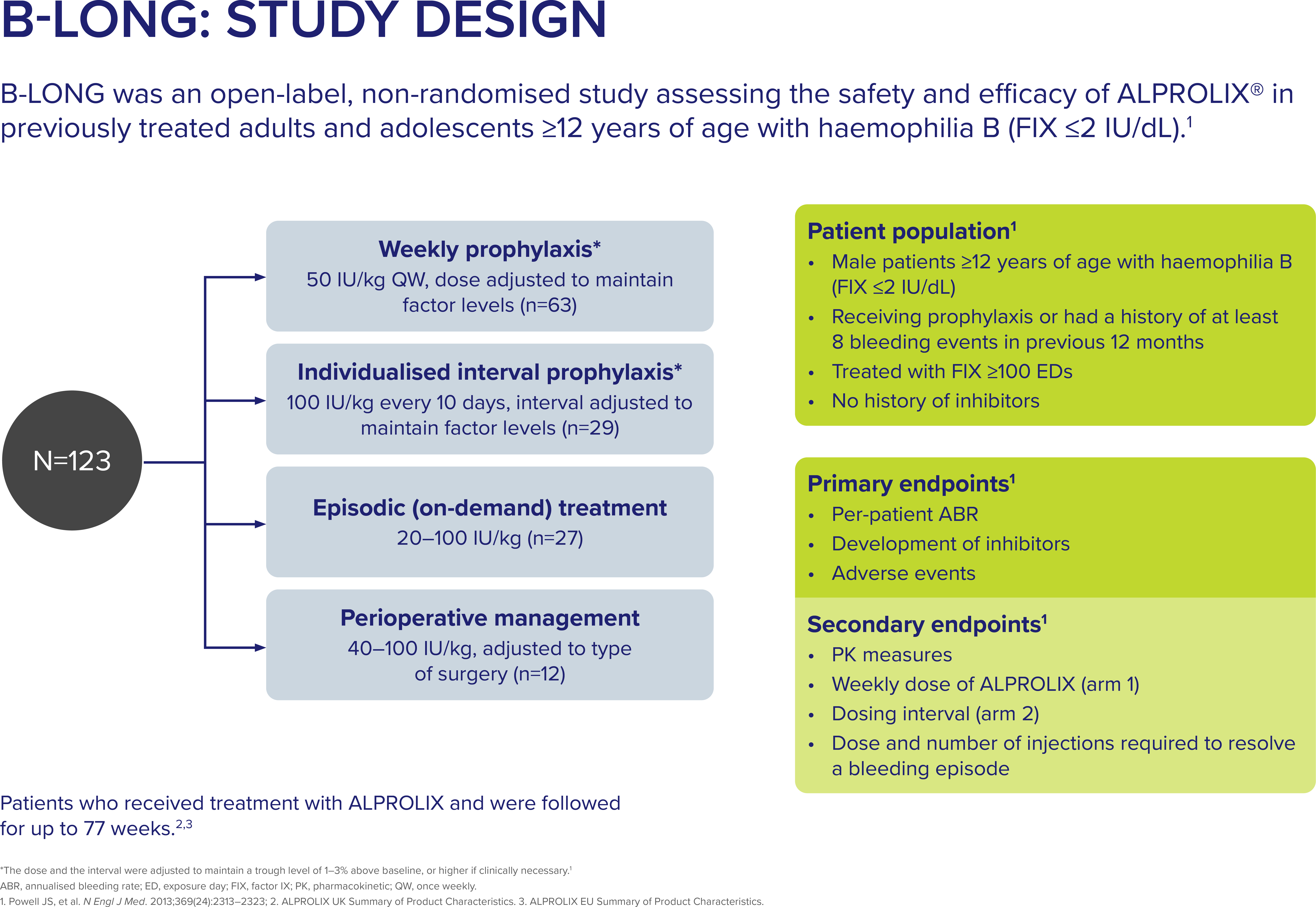
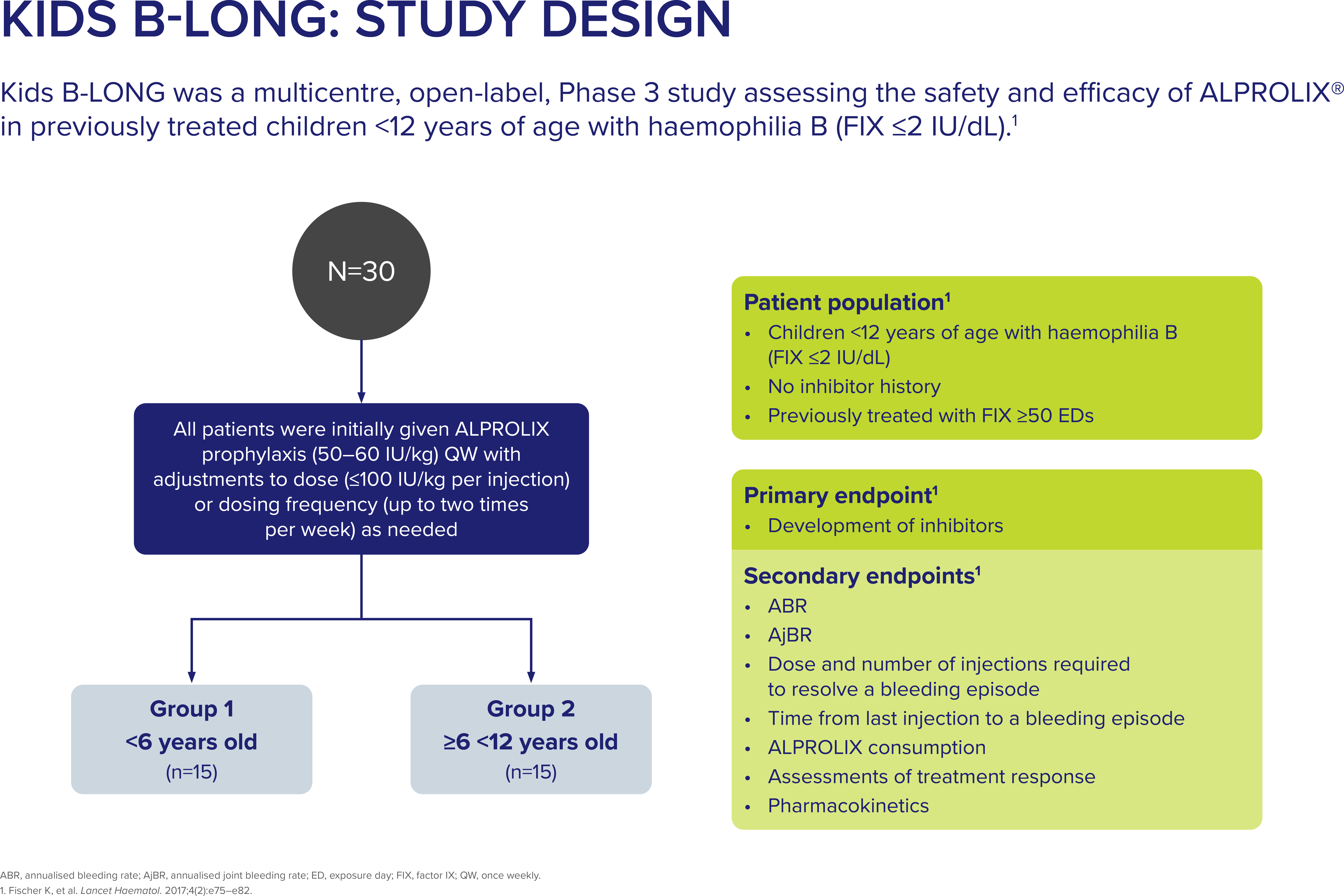
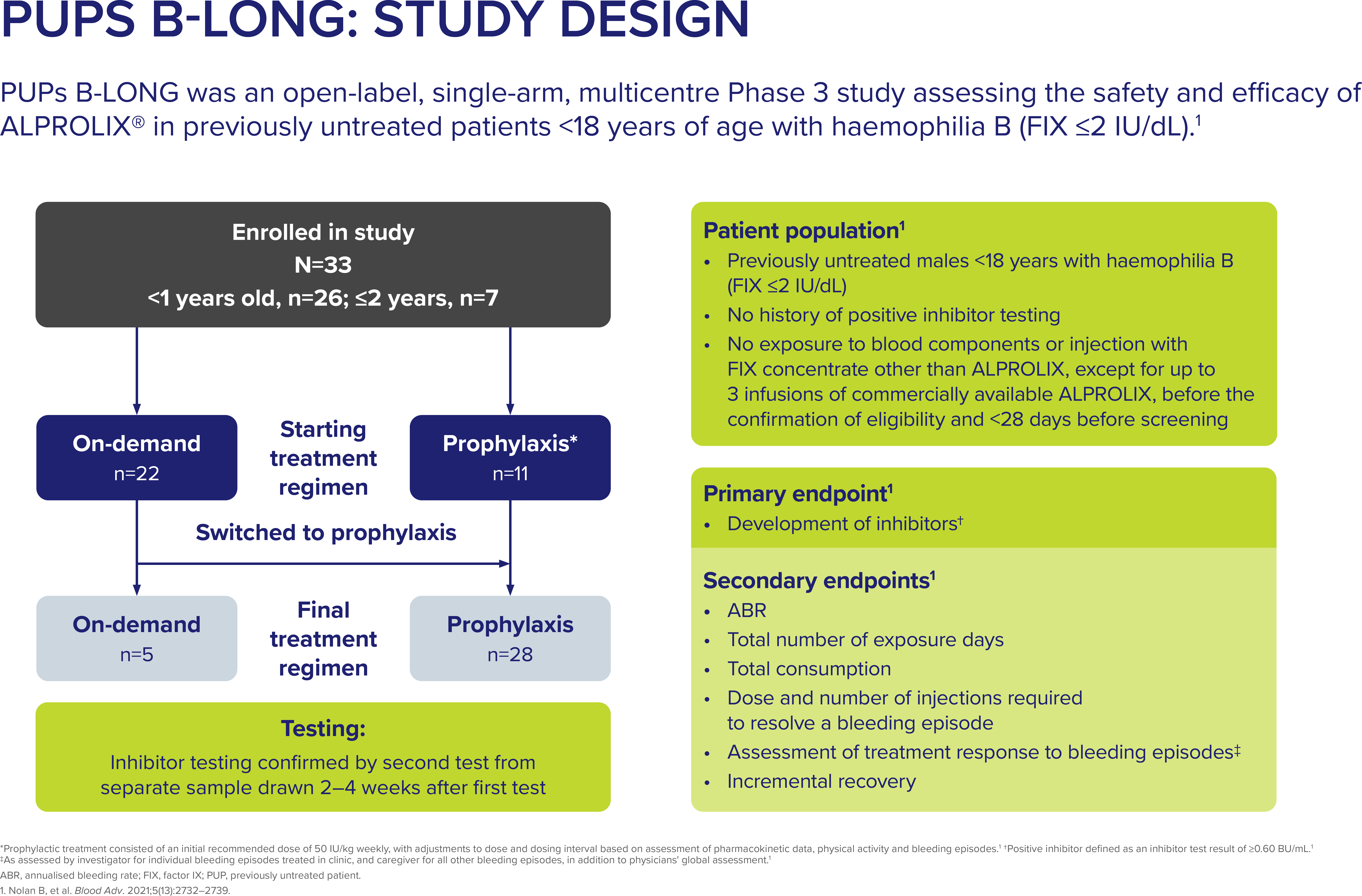
The longitudinal study was a pooled post-hoc assessment of the long-term efficacy and safety data for prophylactic ALPROLIX regimens from the clinical trials (B-LONG, Kids B-LONG, B-YOND) in previously treated patients, including those treated with dosing intervals ≥14 days and those with target joints at baseline.*5
Median joint ABR (IQR)†5
Patients ≥12 years old who received ALPROLIX prophylaxis for 5 years:
- Weekly prophylaxis (n=21): 0.0 (0.0–2.3)
- Individualised prophylaxis (n=17): 1.0 (0.0–1.3)
Patients <12 years old who received ALPROLIX prophylaxis for 4 years:
- Weekly prophylaxis (n=10): 0.0 (0.0–1.3)

Median spontaneous joint ABR (IQR)†5
Patients ≥12 years old who received ALPROLIX prophylaxis for 5 years:
- Weekly prophylaxis (n=21): 0.0 (0.0–1.0)
- Individualised prophylaxis (n=17): 0.0 (0.0–1.0)
Patients <12 years old who received ALPROLIX prophylaxis for 4 years:
- Weekly prophylaxis (n=10): 0.0 (0.0–1.0)
100% target joint resolution5
- All evaluable baseline target joints in 37 patients receiving prophylaxis in B-LONG/B-YOND were resolved with ALPROLIX (93/93)
- No recurrence was seen in 90.2% (83/93) of baseline target joints during follow-up‡
A target joint was considered resolved if there were ≤2 spontaneous bleeds in a consecutive 12-month period in the target joint. Target joints were considered evaluable if they had ≥12 months consecutive follow-up and there had been no surgery on the target joint within the 12 months since the start of follow-up.5
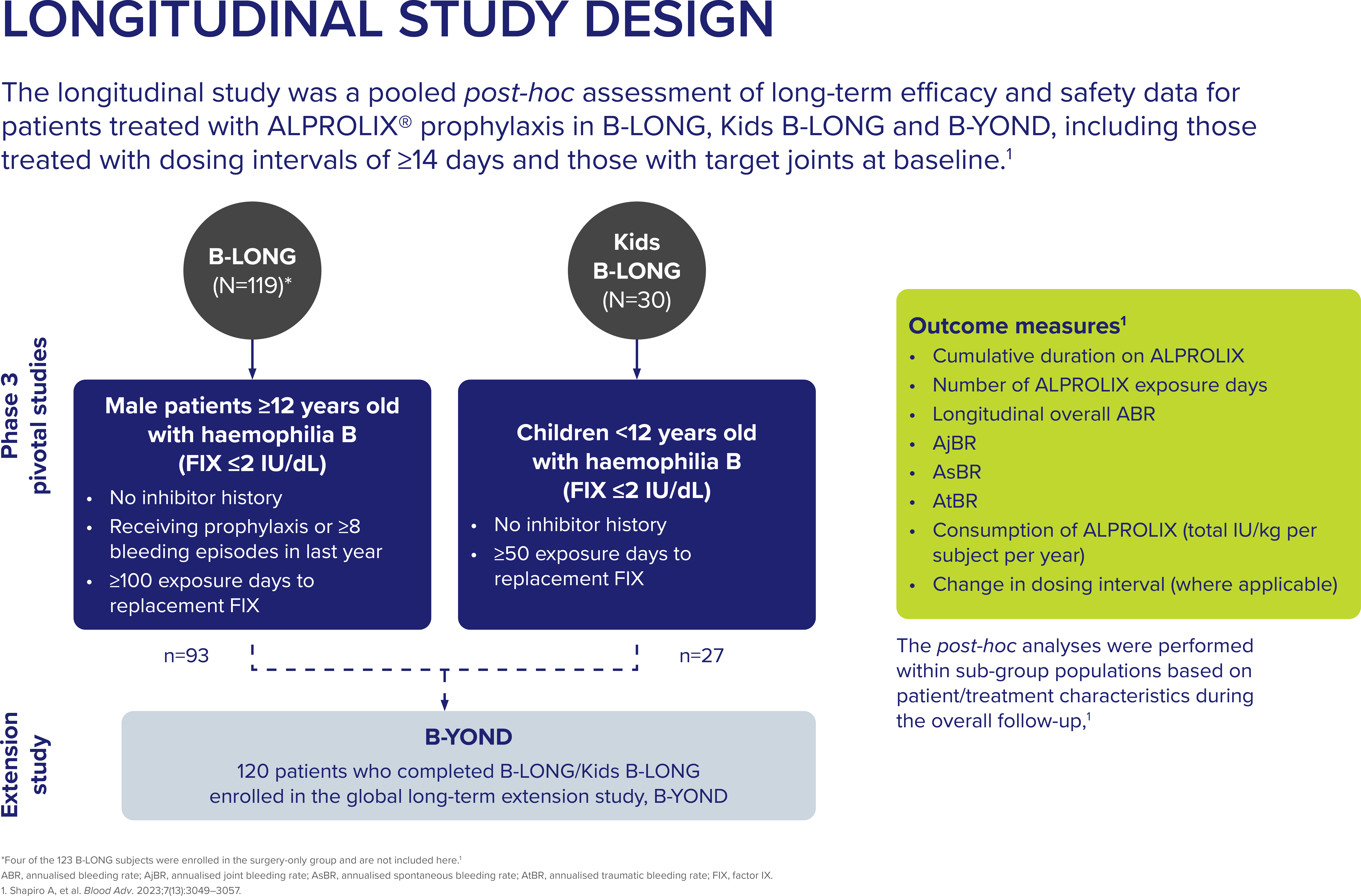
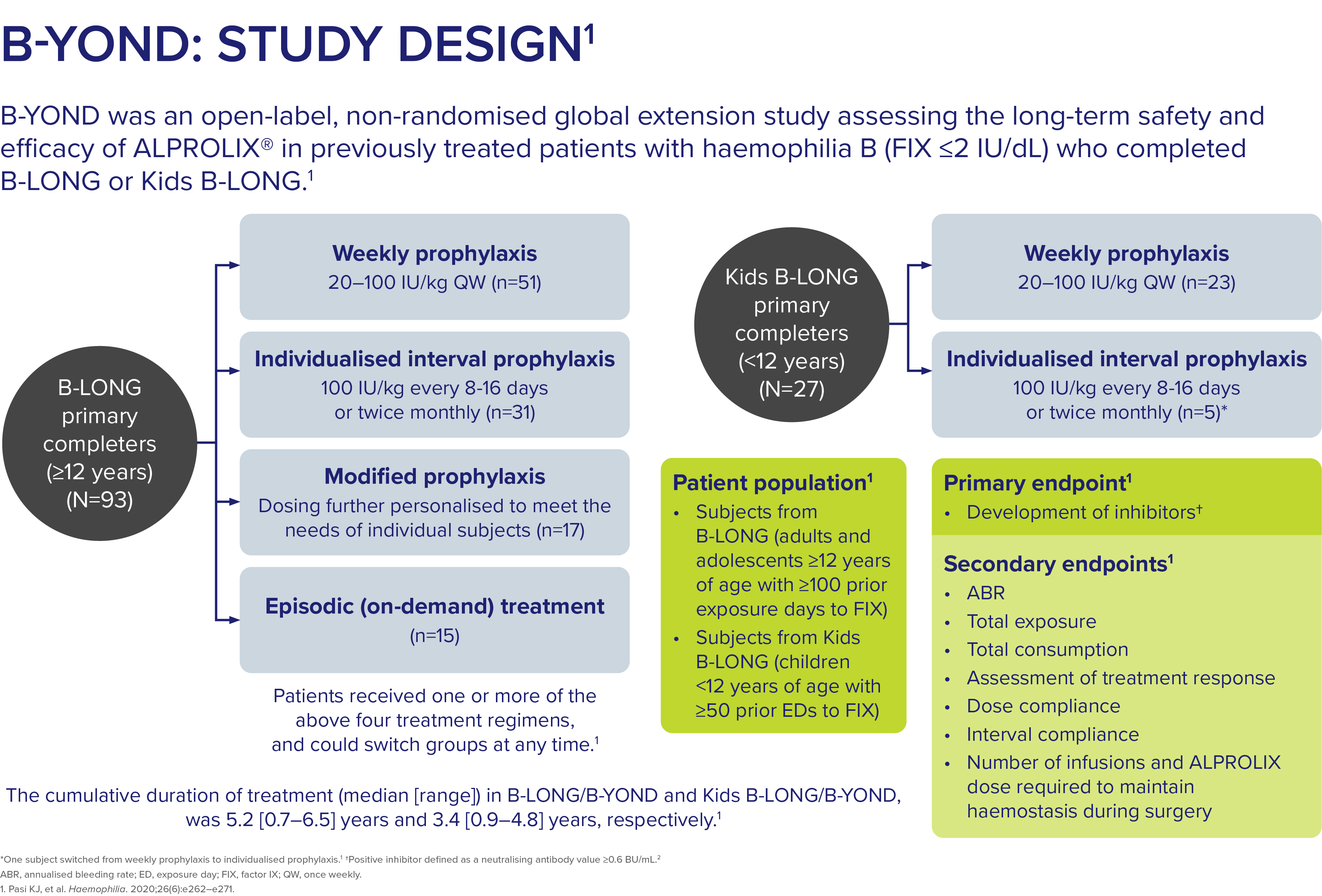
*Median cumulative duration was 3.63 (0.003-6.48) and 2.88 (0.30-4.80) years in B-LONG/B-YOND and Kids B-LONG/B-YOND, respectively.5
†These data are reported from a subanalysis for subjects who remained on WP or IP until year 5 (year 4 for children) in the studies.5 Overall study population: 123 and 30 subjects enrolled in B-LONG and Kids B-LONG studies, respectively. Of these, 93 and 27, respectively, enrolled in the B-YOND study. Note, n=4/123 B-LONG subjects were enrolled in the surgery-only group and were not included in this analysis.5
‡Percentage is based on the number of resolved target joints with ≥6 months’ follow-up after resolution. Recurrence is defined as ≥3 spontaneous bleeds in a single joint within any consecutive 6-month period after the target joint resolution.5
ABR, annualised bleeding rate; AjBR, annualised joint bleeding rate; IQR, interquartile range.
References
1. Kulkarni R, et al. ISTH 2017 Poster PB-961. 2. Powell JS, et al. N Engl J Med. 2013;369(24):2313–2323. 3. Fischer K, et al. Lancet Haematol. 2017;4(2):e75–e82. 4. Pasi KJ, et al. Haemophilia. 2020;26(6):e262–e271. 5. Shapiro A, et al. Blood Adv. 2023;7(13):3049–3057. 6. ALPROLIX UK Summary of Product Characteristics. 7. ALPROLIX EU Summary of Product Characteristics.
ALPROLIX is indicated for the treatment and prophylaxis of bleeding in patients with haemophilia B (congenital factor IX deficiency). ALPROLIX can be used for all age groups.6,7
Adverse events should be reported. Reporting forms and information can be found, for United Kingdom: via the Yellow Card Scheme at www.mhra.gov.uk/yellowcard or search for MHRA Yellow Card in the Google Play or Apple App Store. For Ireland: via HPRA Pharmacovigilance website www.hpra.ie. Adverse events should also be reported to Swedish Orphan Biovitrum Ltd by email at [email protected] or by calling +44 (0) 800 111 4754. |