
Synovitis
In haemophilia, synovitis – inflammation caused by joint bleeds, including subclinical bleeds – is considered to be the last reversible stage before arthropathy.1,2
Normalised haemostasis
The normalisation of haemostasis refers to the prevention of all bleeding and its long-term sequelae, including joint damage, synovitis and arthropathy.3,4
What is Haemophilia?
Haemophilia
Haemophilia is a disease where specific blood clotting factor proteins within the coagulation cascade are partially or completely missing. This leads to extended coagulation times and a risk of uncontrolled bleeding, including into joints and muscles, without necessarily having sustained an injury.5
Types of Haemophilia
- Haemophilia A is a deficiency of factor VIII (FVIII)5
- Haemophilia B is a deficiency of factor IX (FIX)6
Other rare bleeding disorders associated with blood clotting factors also exist, including haemophilia C (factor XI deficiency),7 Von Willebrand disease (Von Willebrand factor [VWF] deficiency)6 and thrombocytopenia (platelet deficiency).8
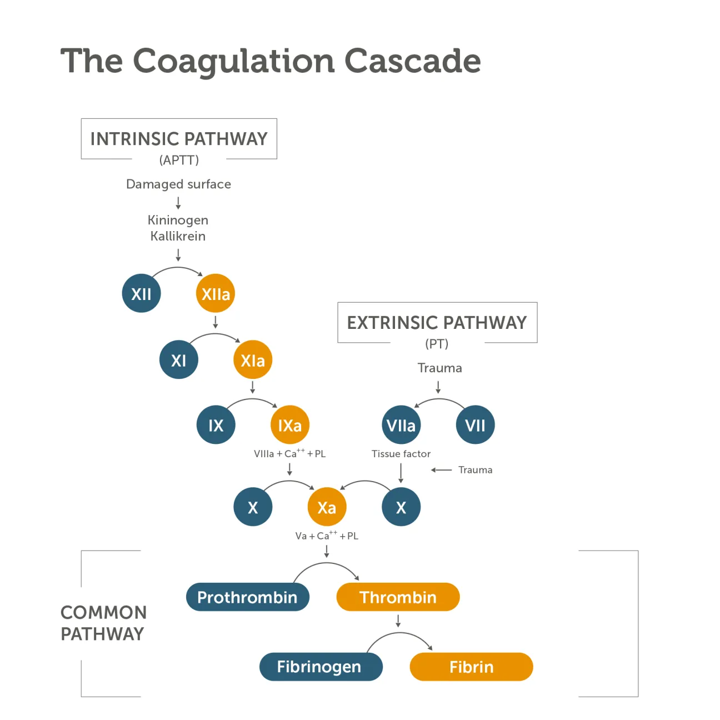
Figure. 1: Coagulation cascade. In healthy individuals, trauma triggers a coagulation, or clotting, cascade. This is a series of reactions in the bloodstream, resulting in haemostasis, to prevent excess bleeding. The coagulation cascade originates as a series of two pathways (the intrinsic and extrinsic pathways) that originate separately and converge into a third, common pathway. These pathways involve a series of circulating clotting factors, each activating the next in a specific order.9
Inheritance and epidemiology
Haemophilia A and B
Haemophilia results from a recessive mutation in the genes responsible for producing FVIII/FIX. These genes are located on the X chromosome, so mutations affect males and females differently.10-14
Acquired haemophilia
In rare cases, a person can develop acquired haemophilia during their life. Acquired haemophilia is an autoimmune condition where the body produces inhibitors that attack clotting factor proteins. It largely affects older people, with an estimated prevalence of one person in a million.15
Haemophilia A affects about 1 in 5000 of the male population, and haemophilia B affects around 1 in 30,000 of the male population. Severe forms of haemophilia are rare in women, and around 30% to 50% of females who are carriers may have milder forms of haemophilia. Haemophilia affects people of all ethnic origins and from all parts of the world.16
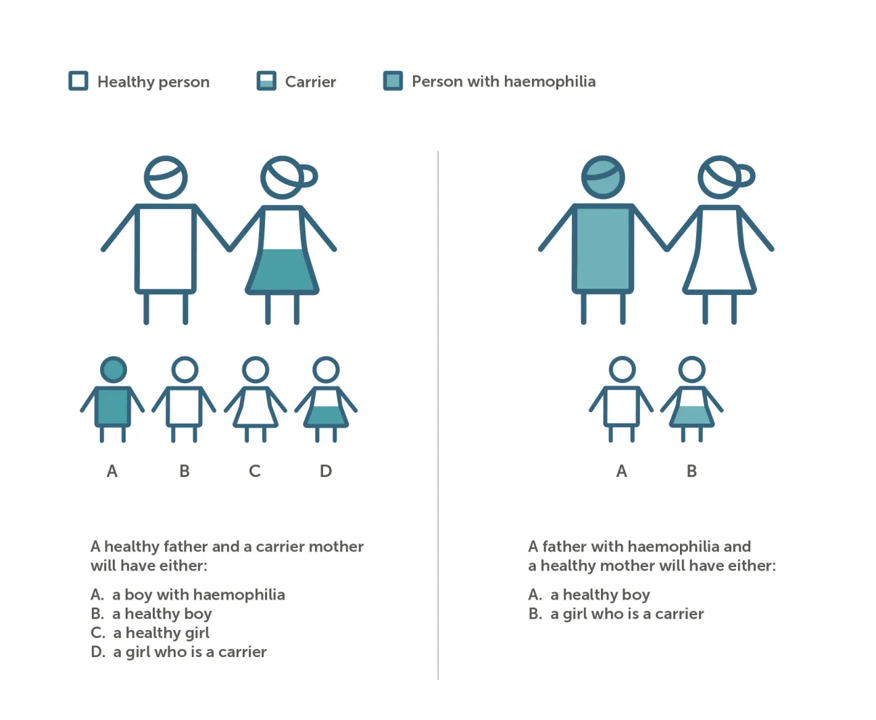
Figure. 2: Genetic inheritance of haemophilia. If a female carrier has children with a male without haemophilia, on average 50% of their sons will have haemophilia and 50% of their daughters will be a carrier. If a male with haemophilia has children with a female without haemophilia, on average 50% of their daughters will be carriers.14
Diagnosis
If an individual is showing some or all of the symptoms of haemophilia, a formal diagnosis may be recommended, especially if there is a family history of haemophilia. Initially, the patient may be invited for screening for blood clotting. If haemophilia is suspected, the patient may be referred for specific FVIII and FIX assays.17-19
Haemophilia is classed as mild, moderate or severe depending on baseline clotting factor levels.16,20
- Haemophilia classification
- Percentage of normal factor activity in blood (%)
- Number of IU per millilitre of blood (IU/mL)
- Mild
- 5–40
- 0.05–0.4
- Moderate
- 1–5
- 0.01–0.05
- Severe
- <1
- <0.01
Symptoms of Haemophilia
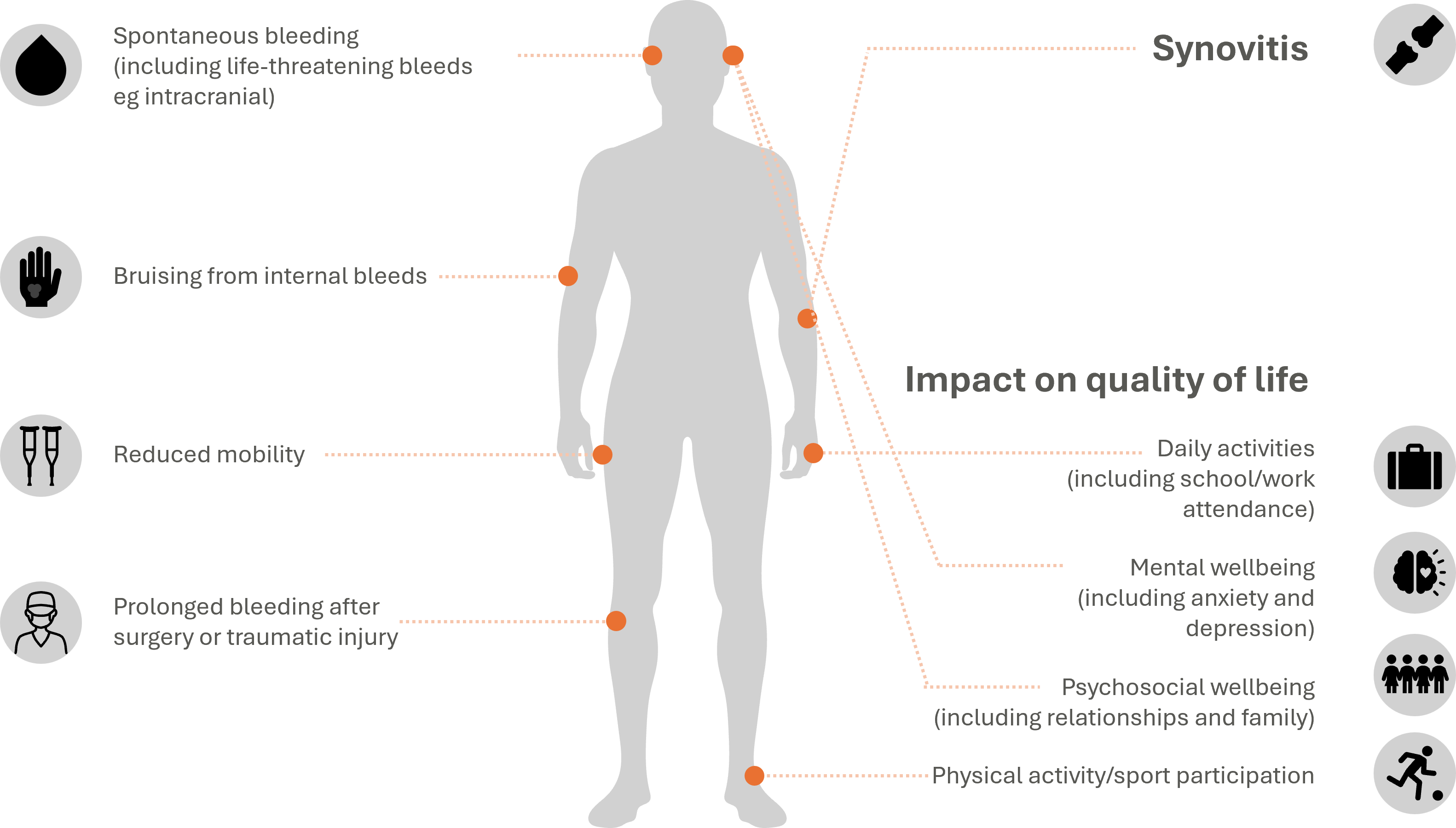
Synovitis (joint inflammation) is associated with symptoms including:1,2,35
- Swelling
- Limited range of motion
- Joint tightness
- Pain
Symptoms of synovitis are not always overt and subclinical bleeding is a key contributor to joint pathology and arthropathy. This reinforces the need for regular assessment and imaging.29
Repeated bleeds and joint damage contribute to a high symptom burden and an impaired quality of life. This includes impacts on daily activity, mental and psychosocial wellbeing and physical activity.36-39
Monitoring Haemophilia A
Accurately measuring factor levels is important for diagnosing and managing some people with haemophilia. One-stage activated partial thromboplastin time-based clotting assays (OSA-aPTT) are the most commonly used method for testing FVIII/IX activity. Alternatively, some haemophilia treatment centres have access to chromogenic substrate assays (CSA), which assess factor activation.40
The choice of assay reagent and analyser can strongly influence the resulting activity. Unlike FVIII-based therapies, non‑factor therapies (NFTs) do not require pre-activation to be functional. This shortens the aPTT, thus artificially increasing OSA FVIII levels and invalidating OSA-aPTT-based assays. Instead, modified CSA must be used to measure the concentration of NFTs; however, translating this to estimate haemostatic activity can be challenging.40
What treatments are available?
Treatment Evolution
Historically, the life expectancy of a person with severe haemophilia was low. Advances in contemporary treatments have transformed the haemophilia landscape, turning the once inconceivable goal of normalised haemostasis into a realistic ambition.4,28
Modern Therapies
Modern therapies may not only enable more active participation in physical pursuits, including sports, but could also enable people with haemophilia to carry out routine activities free from the constant concern of potential bleeding episodes. For children, this progress translates into the opportunity to join their peers in different activities and fosters a more inclusive life experience.4
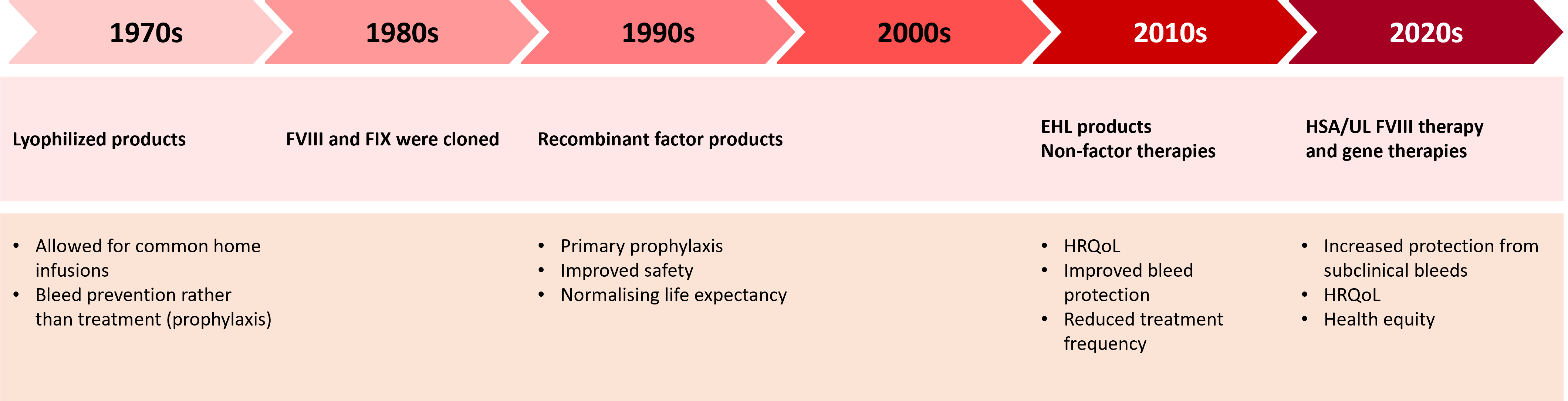
Figure 3: Haemophilia treatment over the decades27-29,41-45
‘Normalisation’ is applied in different areas of medicine to help improve patient outcomes.46-48 In haemophilia, normalisation of haemostasis is a treatment goal that could help overcome the challenges associated with FVIII deficiency. Normalisation should give patients with haemophilia protection from bleeding, synovitis and joint damage to offer elevated standards of care and improved quality of life.4
Types of Haemophilia Treatments:
FVIII-based therapies
FVIII-based therapies
Plasma-derived factor concentrates are derived from donated human plasma, which provides a natural source of clotting factors. Rigorous screening and purification processes are employed to minimise the risk of transmitting infections.49 Recombinant factor concentrates are produced through genetic engineering techniques, creating clotting factor proteins in a laboratory setting.29,49
Standard half-life (SHL) FVIII
SHL factor concentrates involve injections of clotting factor with a physiological half-life, requiring regular administrations to maintain adequate levels in the bloodstream.50
Extended half-life (EHL) FVIII
EHL factor concentrates are designed to remain active in the bloodstream for a longer duration than SHL therapies, allowing for higher factor levels with less frequent injections. This approach aims to improve bleed control and reduce the frequency of treatment, especially in prophylactic regimens.51-54
High-sustained activity/ ultra-long (HSA/UL) FVIII
HSA/UL half-life factor concentrates are bioengineered to provide sustained FVIII activity for several days after a single injection. By overcoming the natural half-life limitations imposed by VWF binding, HSA/UL-FVIII therapies extend FVIII exposure beyond SHL and EHL products and allow less frequent dosing and longer periods in the non-haemophilia range.55,56
FVIIIa mimetics
FVIII mimetics involve an alternative haemostatic agent to substitute for clotting factor. They aim to enhance haemostasis by mimicking factor function, offering an alternative to traditional factor replacement therapy.29
Rebalancing agents
Rebalancing agents are designed to restore deficient thrombin generation by downregulating natural anticoagulants to induce a controlled and reversible procoagulant shift. Rebalancing agents can be used in people with inhibitors.57
Development of Antibodies
For most people with haemophilia A, FVIII replacement therapy is highly effective. However, in some individuals, the immune system recognises the injected FVIII as a foreign protein and develops neutralising antibodies (FVIII inhibitors), which reduce the haemostatic effectiveness of FVIII.60
Inhibitor rates are higher in people with haemophilia A (versus haemophilia B), in people with severe haemophilia (vs mild or moderate) and in previously untreated patients. The majority of inhibitors develop within the first 20 exposure days. For this reason, for patients with newly diagnosed haemophilia A, the World Federation of Hemophilia (WFH) recommends regular inhibitor screening at least every 6–12 months, then annually.29
Immune tolerance induction (ITI) offers a strategy to re-establish FVIII responsiveness through sustained doses of FVIII, with the goal of FVIII tolerisation. ITI can be burdensome but is the gold standard to eradicate inhibitors and restore the clinical efficacy of FVIII replacement therapy. When inhibitors persist, prophylactic options with NFTs are available to maintain bleed protection.60-62
Comorbidities and Special Populations
Treatment advances have increased life expectancy for people with haemophilia; however, this has been accompanied by an increasing number of people with haemophilia living with comorbidities.29
Cardiovascular comorbidities
“We recommend [a] baseline FVIII or FIX coagulation factor activity safe for antithrombotic use [of] 20 IU/dL for dual antiplatelet therapy or oral anticoagulation”
Management of cardiovascular disease is a challenge for ageing people with haemophilia. Antithrombotic treatments, including antiplatelets and anticoagulants, have been shown to be associated with increased rates of bleeding in people with haemophilia.29 However, based on available coagulation laboratory evidence, baseline FVIII/FIX levels >20 IU/dL appear to be a reasonable threshold to minimise bleeding risk in people with haemophilia on antithrombotics.63
EHA-ISTH-EAHAD-ESO
Clinical Practice Guidance Document, 2024
Surgery
“Surgery for patients with haemophilia requires additional planning and interaction with the healthcare team compared to what is required for other patients”29
Surgery poses particular risks to people with haemophilia, but surgical procedures can be performed safely with the provision of adequate laboratory support, careful perioperative planning, appropriate haemostasis with sufficient quantities of clotting factor concentrates and other haemostasis products during and after surgery, and optimal post‑operative recovery and rehabilitation.29
WFH
Guidelines for the Management of Hemophilia, 2020
Haemophilia FAQs
This section provides answers to frequently asked clinical questions on the diagnosis and management of haemophilia.
What is the pathophysiology and genetic basis of haemophilia A?
In healthy individuals, bleeding is controlled by a series of clotting proteins that work together to form a stable clot after injury.9 In haemophilia A, patients have a deficiency of factor VIII (FVIII), a key clotting protein within the cascade.5 This means that clot formation is slower, leading to prolonged or spontaneous bleeding in affected individuals.5
Haemophilia A is commonly caused by a recessive mutation in the F8 gene, which contains the instructions for synthesising FVIII. This gene is located on the X chromosome, so haemophilia A is more common and often more severe in males, while females are more likely to be carriers.10,12 In some individuals, haemophilia A occurs despite no family history because of a spontaneous genetic mutation.14
How is the severity of haemophilia A diagnosed?
The severity of haemophilia A is diagnosed based on a patient’s baseline FVIII activity level in the blood, which reflects how much functional clotting factor is available.16,20
FVIII activity is typically measured using laboratory clotting assays, most commonly one-stage activated partial thromboplastin time-based assays. Results are reported as a percentage of normal FVIII activity or per volume of blood.40
Haemophilia A is classified as mild when FVIII levels are between 5% and 40% (0.05–0.4 IU/mL), moderate when levels are between 1% and 5% (0.01–0.05 IU/mL) and severe when FVIII activity is below 1% (<0.01 IU/mL).16,20
When explaining severity to patients and their families, laboratory categories can be linked to bleeding patterns to help patients understand the likelihood of spontaneous bleeding, bleeding after trauma or surgery and the need for prophylactic treatment. In patients with FVIII <40%, spontaneous bleeds, synovitis and joint damage can occur, whereas normalised haemostasis may protect from bleeds, synovitis and joint damage.4,23-34
What complications can occur if haemophilia A is insufficiently treated?
Haemophilia A is a lifelong condition, and the consequences of insufficient treatment can vary across different stages of a patient’s life.
When FVIII levels are inadequately managed, the most immediate complication is uncontrolled or excessive bleeding. Patients are at increased risk of prolonged bleeding after injury, as well as during surgical procedures. In some people with haemophilia, spontaneous bleeding can occur, including potentially serious internal bleeds (eg intracranial haemorrhage).22
Subclinical bleeding into joints is an important complication of inadequately managed haemophilia. Over time, repeated bleeds can lead to acute synovitis, which may progress to chronic synovitis and haemophilic arthropathy, presenting as joint swelling, pain and a reduced range of movement.1,2,35
These physical complications can have wider consequences on a patient’s quality of life, including their mobility and ability to participate in physical activity, daily activities and mental and psychosocial wellbeing. This underlies the importance of effective treatment to minimise bleeding episodes and prevent long-term joint damage and the associated impacts.36-39
What are inhibitors, and how do they affect the management of haemophilia A?
The immune system may recognise injected FVIII as a foreign protein and develop neutralising antibodies (FVIII inhibitors), which reduce the haemostatic effectiveness of FVIII.60 The majority of inhibitors develop within the first 20 exposure days of an FVIII replacement therapy; therefore, frequent screening is needed in this period.29
Multiple options are available for patients who develop inhibitors. Immune tolerance induction (ITI) involves a high-intensity administration of FVIII over a prolonged period, with the goal of FVIII tolerisation.64 Additionally or alternatively, patients may use non-FVIII-based therapies to provide bleed protection when inhibitors persist or during ITI; however, these do not eliminate the underlying immune response.60-62
What considerations should be made when patients with haemophilia A experience emergency bleeding or require surgery?
Surgery, both major and minor, poses particular risks to people with haemophilia. Surgical procedures can be performed safely in well‑managed haemophilia centres, provided there is adequate laboratory support for sensitive monitoring of coagulation assays, careful perioperative planning and sufficient quantities of clotting factor concentrates during and after surgery.29
What treatments are available for haemophilia A?
Historically, treatment options for people with haemophilia were limited, and blood transfusions were often the only way to manage serious bleeding. Contemporary treatments have revolutionised the landscape for people with haemophilia, allowing them to live longer, healthier lives and take part more fully in everyday activities.27,29,41-45,65
Many treatments work by replacing FVIII, which is deficient in people with haemophilia A. Treatments differ in their half life, which determines how long they stay active in the body.
Standard half-life therapies require regular administration to maintain adequate FVIII levels in the bloodstream. They can be used on demand to treat bleeding when it happens or as a prophylactic therapy to help prevent bleeds.66
Extended half-life therapies remain active in the bloodstream for longer, allowing for higher FVIII levels with less frequent administration.51,52,54
High-sustained activity/ultra-long FVIII therapies are bioengineered to provide sustained FVIII activity for several days after a single injection. This can allow fewer injections and longer periods where FVIII levels are in the non-haemophilia range.55,56
Non-factor therapies do not replace FVIII directly so may be suitable for use in patients with FVIII inhibitors.67 FVIII mimetics target the underlying haemostatic defect by mimicking factor function.67 Rebalancing agents are designed to restore deficient thrombin generation by downregulating natural anticoagulants.57 Bypassing agents act by promoting thrombin generation via alternative pathways to bypass the need for FVIII.68
Gene therapy involves introducing a working copy of the F8 gene to the patient’s cells, allowing them to produce FVIII themselves. The goal of gene therapy is to provide long-lasting improvements in clotting to reduce the need for regular treatment.59
Normalisation of Haemostasis FAQ
This section provides answers to frequently asked clinical questions on the normalisation of haemostasis in haemophilia.
What are the benefits of targeting FVIII levels in the non-haemophilia range?
Historically, treatment targets in haemophilia A focused on preventing severe bleeding, but increasing evidence supports a shift towards targeting normalised haemostasis to reflect outcomes seen in people without haemophilia.4,21,23-2
Normalisation should give patients with haemophilia protection from bleeding, synovitis and joint damage to offer elevated standards of care and improved quality of life.4 From a clinical perspective, targeting FVIII levels consistent with normalised haemostasis aligns with broader trends in medicine where normalisation of physiological parameters is associated with improved long-term outcomes (eg normalisation of blood glucose levels in people with diabetes).46-48 In haemophilia A, this approach supports a higher standard of care by aiming to not only prevent bleeds but also to preserve joint health, enable participation in daily activities and reduce long-term disease burden.4,21,23-28
How can normalisation of haemostasis contribute to improving health equity in haemophilia care?
To achieve health equity in haemophilia, highly effective treatments are required to enable people with haemophilia of all severities to live a life comparable to their non-haemophilic peers.4
Even with conventional prophylactic treatments, haemophilia continues to impact on peoples’ lives.69,70 Patients with haemophilia frequently report bleeding and pain, which can interfere with their social and professional opportunities, mental and psychosocial wellbeing and willingness and/or capacity for physical activity.69-72
Normalisation of haemostasis is a tool for improving health equity by enabling more consistent and sustained bleeding protection for patients with haemophilia A. Normalisation should allow patients to withstand minor trauma without bleeding (including subclinical bleeds) to avoid joint damage, synovitis and chronic arthropathy. In turn, reliable bleed protection offers people with haemophilia greater mental security and confidence to pursue social and professional physical activities, with less anxiety around the potential repercussions on their joints. If people with haemophilia are able to share aspirations similar to their non-haemophilic peers, improved mental health and psychosocial wellbeing may be realised.4
Synovitis FAQ
This section provides answers to frequently asked clinical questions on the assessment and management of synovitis in haemophilia.
What causes synovitis in patients with haemophilia?
Synovitis is the inflammation of the synovial membrane resulting from an inflammatory process triggered by repeated bleeding into the joints.1
Bleeding into joints leads to the deposition of haemoglobin-derived iron (haemosiderin) into the joint cavity. In the synovium, iron induces an inflammatory response that stimulates cell proliferation and the production of pro-inflammatory cytokines and tissue destructive proteases. This inflammatory response causes the normally thin synovial membrane to become thickened and irregular. The hypertrophied and inflamed synovium releases growth factors to trigger aberrant vascular remodelling, making the joint increasingly vulnerable to subsequent repeated bleeding in a cascade of arthropathy.1
Acute synovitis is recognised by swelling and thickening of the synovial membrane. Chronic synovitis develops after 3 months of acute synovitis, with swelling and loss of joint motion. Failure to manage synovitis results in a vicious cycle of bleeding and inflammation that leads to irreversible arthropathy.1,29
Synovitis can occur even in the absence of recognised joint bleeds and clinical symptoms.73 Despite prophylaxis, real-world studies have demonstrated signs of subclinical bleeding in patients with haemophilia, including haemosiderin depositions and synovial proliferation at ultrasound.74,75 These findings highlight the importance of routine joint assessment using a multimodal clinical and imaging approach to detect early joint abnormalities and enable early interventions.74,76
Why and how should joint health and synovitis be monitored in patients with haemophilia A?
Joint health should be regularly monitored in patients with haemophilia A as joints are particularly vulnerable to bleeding. Repeated bleeds into joints can lead to synovitis, which is the inflammation and hypertrophy of the synovial membrane.2 Synovitis can be asymptomatic35 or may be associated with symptoms including joint pain, swelling and limited range of movement. Failure to manage synovitis results in a vicious cycle of inflammation and bleeding, leading to irreversible arthropathy. This highlights the importance of early detection.29
Routine assessment of joints should be performed using a multimodal approach. Joint assessment should be performed on a regular basis (at least annually). Synovitis may be asymptomatic and not identified during physical examination, so imaging should be used routinely to detect early joint damage and enable early intervention.75-78
Interpretation of ultrasound images can be challenging, but standardised protocols exist to increase reproducibility and comparability across clinics.79-81 The Hemophilia Early Arthropathy Detection with Ultrasound (HEAD-US) score is based on an additive scale used to assess synovial hypertrophy in people with haemophilia.79 The Joint tissue Activity and Damage Exam (JADE) quantifies soft tissue and osteochondral abnormalities based on grey-scale and doppler ultrasound.81 While ultrasound is quick to perform, low cost and widely accessible, magnetic resonance imaging (MRI) is considered the gold standard of joint assessment because of its sensitivity in detecting subclinical bleeding.2,74,82
References
van Vulpen LFD, Thomas S, Keny SA, Mohanty SS. Synovitis and synovectomy in haemophilia. Haemophilia. 2021;27(Suppl 3):96-102.
Dargaud Y, Lobet S, Roussel N, Valentino LA. Unmet needs in hemophilic arthropathy. Blood Rev. 2025;74:101304.
Hermans C, Auerswald G, Berrueco R, et al. Normalization of haemostasis in people with haemophilia A: expert consensus on unmet needs and a framework for advancing towards health equity. TH Opens. 2026;10:a28557618.
Holme PA, Blatny J, Chowdary P, et al. Moving towards normalization of haemostasis and health equity: evolving treatment goals for haemophilia A. Haemophilia. 2024;30:1109-14.
Haemophilia [Internet]. London: The Haemophilia Society; 2026 [cited 30 June 2026]. Available from: https://haemophilia.org.uk/bleeding-disorders/haemophilia-a-and-b/.
What is von Willebrand Disease (VWD)? [Internet]. Lexington: Takeda Pharmaceuticals U.S.A.; 2023 [cited 30 June 2026]. Available from: https://www.bleedingdisorders.com/von-willebrand-disease.
Factor XI Deficiency [Internet]. New York: WebMD LLC; 2025 [cited 30 June 2026]. Available from: https://emedicine.medscape.com/article/209984-overview.
Hemophilia, Differential Diagnosis [Internet]. New York: Rare Disease Advisor; 2021 [cited 30 June 2026]. Available from: https://www.rarediseaseadvisor.com/disease-info-pages/hemophilia-differential-diagnosis/.
Chaudhry R. Physiology, Coagulation Pathways. Treasure Island: StatPearls Publishing; 2026.
How Hemophilia is Inherited [Internet]. Atlanta: Centers for Disease Control and Prevention; [cited 30 June 2026]. Available from: https://www.cdc.gov/ncbddd/hemophilia/inheritance-pattern.html.
Haemophilia B [Internet]. New York: National Bleeding Disorders Foundation; 2026 [cited 30 June 2026]. Available from: https://www.hemophilia.org/bleeding-disorders-a-z/types/hemophilia-a.
Hemophilia A [Internet]. New York: National Bleeding Disorders Foundation; 2026 [cited 30 June 2026]. Available from: https://www.hemophilia.org/bleeding-disorders-a-z/types/hemophilia-a.
Haemophilia A [Internet]. Quincy: National Organization for Rare Disorders; 2025 [cited 30 June 2026]. Available from: https://rarediseases.org/rare-diseases/hemophilia-a/.
What causes Haemophilia? [Internet]. London: The Haemophilia Society; [cited 30 June 2026]. Available from: https://haemophilia.org.uk/bleeding-disorders/haemophilia-a-and-b/what-causes-haemophilia/.
Acquired Haemophilia [Internet]. Quincy: National Organization for Rare Disorders; 2026 [cited 30 June 2026]. Available from: https://rarediseases.org/rare-diseases/acquired-hemophilia/.
Understanding Haemophilia [Internet]. London: The Haemophilia Society; [cited 30 June 2026]. Available from: https://haemophilia.org.uk/wp-content/uploads/2017/04/Understanding_haemophilia_WEB.pdf.
Hemophilia [Internet]. Bethesda: National Library of Medicine; 2023 [cited 30 June 2026]. Available from: https://medlineplus.gov/hemophilia.html.
Hemophilia [Internet]. Cleveland: Cleveland Clinic; 2025 [cited 30 June 2026]. Available from: https://my.clevelandclinic.org/health/diseases/14083-hemophilia.
Diagnosing Haemophilia [Internet]. London: The Haemophilia Society; [cited 30 June 2026]. Available from: https://haemophilia.org.uk/bleeding-disorders/haemophilia-a-and-b/diagnosing-haemophilia/.
Understanding Haemophilia [Internet]. Basingstoke: NHS Southern Haemophilia Network; 2026 [cited 30 June 2026]. Available from: https://www.southernhaemophilianetwork.org/about/haemophilia/what-is/.
Di Minno MND, Calcaterra IL, Baldacci E, et al. Intensive FVIII replacement in hemophilia patients with hypertrophic synovium: a randomized study. J Thromb Haemost. 2025;23:458-65.
E-Learning [Internet]. Montréal: World Federation of Haemophilia; 2026 [cited 30 June 2026]. Available from: https://elearning.wfh.org/elearning-centres/hemophilia/.
Jones C, Wu Y, Kragh N, et al. The association of factor VIII activity levels with bleeding and quality of life in haemophilia a: findings from the European CHESS II study. Orphanet J Rare Dis. 2025;20:272.
Chowdary P, Fischer K, Collins PW, et al. Modeling to predict factor VIII levels associated with zero bleeds in patients with severe hemophilia A initiated on tertiary prophylaxis. Thromb Haemost. 2020;120:728-36.
Tiede A, Abdul Karim F, Jimenez-Yuste V, et al. Factor VIII activity and bleeding risk during prophylaxis for severe hemophilia A: a population pharmacokinetic model. Haematologica. 2021;106:1902-9.
Malec L, Matino D. Targeting higher factor VIII levels for prophylaxis in haemophilia A: a narrative review. Haemophilia. 2023;29:1419-29.
Carcao M, Selvaratnam V, Blatny J. How much prophylaxis is enough in haemophilia? Haemophilia. 2024;30(Suppl 3):86-94.
Maneikis K, Krumb E, Hermans C. Normalization in hemophilia: conceptual foundations and clinical implications. Res Pract Thromb Haemost. 2025;9:103200.
Srivastava A, Santagostino E, Dougall A, et al. WFH Guidelines for the Management of Hemophilia, 3rd edition. Haemophilia. 2020;26(Suppl 6):1-158.
Barg AA, Budnik I, Avishai E, et al. Emicizumab prophylaxis: prospective longitudinal real-world follow-up and monitoring. Haemophilia. 2021;27:383-91.
Wilkins RA, Stephensen D, Siddle H, et al. Twelve-month prevalence of haemarthrosis and joint disease using the Haemophilia Joint Health score: evaluation of the UK National Haemophilia Database and Haemtrack patient reported data: an observational study. BMJ Open. 2022;12:e052358.
De la Corte-Rodriguez H, Bystricka L, Ball N, et al. Assessment of joint health in patients receiving prophylaxis for haemophilia A: a cross-sectional survey in five European countries. BMJ Open. 2024;14:e082204.
Batsuli G, Wheeler AP, Weyand AC, Sidonio RF, Jr., Young G. Severe muscle bleeds in children and young adults with hemophilia A on emicizumab prophylaxis: Real-world retrospective multi-institutional cohort. Am J Hematol. 2023;98:E285-E7.
De la Corte-Rodriguez H, Rodriguez-Merchan EC, Alvarez-Roman MT, et al. Arthropathy in people with mild haemophilia: Exploring risk factors. Thromb Res. 2022;211:19-26.
Rodriguez-Merchan EC, Valentino LA. Orthopedic disorders of the knee in hemophilia: a current concept review. World J Orthop. 2016;7:370-5.
Forsyth AL, Witkop M, Lambing A, et al. Associations of quality of life, pain, and self-reported arthritis with age, employment, bleed rate, and utilization of hemophilia treatment center and health care provider services: results in adults with hemophilia in the HERO study. Patient Prefer Adherence. 2015;9:1549-60.
Walsh C, Boggio L, Brown-Jones L, et al. Identified unmet needs and proposed solutions in mild-to-moderate haemophilia: a summary of opinions from a roundtable of haemophilia experts. Haemophilia. 2021;27(Suppl 1):25-32.
von Mackensen S, Eldar-Lissai A, Auguste P, et al. Measurement properties of the Haem-A-QoL in haemophilia clinical trials. Haemophilia. 2017;23:383-91.
O'Hara S, Castro FA, Black J, et al. Disease burden and remaining unmet need in patients with haemophilia A treated with primary prophylaxis. Haemophilia. 2021;27:113-9.
Bowyer AE, Gosselin RC. Factor VIII and factor IX activity measurements for hemophilia diagnosis and related treatments. Semin Thromb Hemost. 2023;49:609-20.
Lewandowska M, Nasr S, Shapiro AD. Therapeutic and technological advancements in haemophilia care: Quantum leaps forward. Haemophilia. 2022;28(Suppl 4):77-92.
Oldenburg J. Optimal treatment strategies for hemophilia: achievements and limitations of current prophylactic regimens. Blood. 2015;125:2038-44.
Skinner MW, Nugent D, Wilton P, et al. Achieving the unimaginable: health equity in haemophilia. Haemophilia. 2020;26:17-24.
Mannucci PM. Hemophilia therapy: the future has begun. Haematologica. 2020;105:545-53.
von Drygalski A, Chowdary P, Kulkarni R, et al. Efanesoctocog alfa prophylaxis for patients with severe hemophilia A. N Engl J Med. 2023;388:310-8.
Clinical investigation of medicinal products in the treatment or prevention of diabetes mellitus – Scientific guideline [Internet]. Brussels: European Medical Association; 2026 [cited 30 June 2026]. Available from: https://www.ema.europa.eu/en/clinical-investigation-medicinal-products-treatment-or-prevention-diabetes-mellitus-scientific-guideline.
Sall F, Meneas GC, Siransy BAE, et al. Predicting factors of blood pressure normalization in hypertensive patients after short-term follow-up. Front Cardiovasc Med. 2024;11:1403214.
Jimenez K, Kulnigg-Dabsch S, Gasche C. Management of iron deficiency anemia. Gastroenterol Hepatol (N Y). 2015;11:241-50.
Treatment of Haemophilia [Internet]. Atlanta: Centers for Disease Control and Prevention; [cited 30 June 2026]. Available from: https://www.cdc.gov/ncbddd/hemophilia/treatment.html.
Haemophilia Treatment [Internet]. Dublin: Irish Haemophilia Society; [cited 30 June 2026]. Available from: https://haemophilia.ie/about-bleeding-disorders/haemophilia/haemophilia-treatment-2/.
Berntorp E, Negrier C, Gozzi P, Blaas PM, Lethagen S. Dosing regimens, FVIII levels and estimated haemostatic protection with special focus on rFVIIIFc. Haemophilia. 2016;22:389-96.
Current Treatments [Internet]. New York: National Bleeding Disorders Foundation; 2026 [cited 30 June 2026]. Available from: https://www.hemophilia.org/bleeding-disorders-a-z/treatment/current-treatments.
Shapiro A, Chaudhury A, Wang M, et al. Real-world data demonstrate improved bleed control and extended dosing intervals for patients with haemophilia B after switching to recombinant factor IX Fc fusion protein (rFIXFc) for up to 5 years. Haemophilia. 2020;26:975-83.
Tagliaferri A, Matichecchia A, Rivolta GF, et al. Optimising prophylaxis outcomes and costs in haemophilia patients switching to recombinant FVIII-Fc: a single-centre real-world experience. Blood Transfus. 2020;18:374-85.
Hermans C, Chowdary P, Konkle BA, et al. A revised classification of FVIII concentrates: rationale and novel metrics. Blood Adv. 2026;10:3409-17.
Hermans C, Pierce GF. Ultra-long factor VIII: a major step forward toward a hemophilia-free mind. J Thromb Haemost. 2024;22:1844-6.
Hermans C, Van Thillo Q, Pierce GF, Mancuso ME. Balancing the benefits and risks of rebalancing coagulation in haemophilia. Lancet Haematol. 2026;13:e261-e6.
Chai-Adisaksopha C, Nevitt SJ, Simpson ML, Janbain M, Konkle BA. Bypassing agent prophylaxis in people with hemophilia A or B with inhibitors. Cochrane Database Syst Rev. 2017;9:CD011441.
Lenting P, Fong S. Gene therapy for hemophilia. Blood Adv. 2024;8:6081.
Inhibitors [Internet]. London: The Haemophilia Society; [cited 30 June 2026]. Available from: https://haemophilia.org.uk/bleeding-disorders/inhibitors/.
Königs C, Meeks S, Nolan B, et al. Rescue immune tolerance induction with a recombinant factor Fc-fused VIII: prospective ReITIrate study of clinical, humoral and cellular immune responses. Ther Adv Hematol. 2024;15:1-16.
Aledort L. The ongoing imperative for immune tolerance induction in inhibitor management. Haemophilia. 2018;25:183-6.
Escobar M, Lassila R, Bekdache C, Owaidah T, Sholzberg M. Use of antithrombotic therapy in patients with hemophilia: a selected synopsis of the European Hematology Association - International Society on Thrombosis and Haemostasis - European Association for Hemophilia and Allied Disorders - European Stroke Organization Clinical Practice Guidance document. J Thromb Haemost. 2025;23:745-9.
Escuriola C, Sidonio RF, Jr. Strategies for immune tolerance induction in hemophilia a patients with inhibitors: the first prespecified interim analysis from the MOTIVATE study. Blood. 2024;144:5475.
Rayment R, Chalmers E, Forsyth K, et al. Guidelines on the use of prophylactic factor replacement for children and adults with Haemophilia A and B. Br J Haematol. 2020;190:684-95.
SHL/EHL Fact Sheet [Internet]. Montréal: World Federation of Haemophilia; 2025 [cited 30 June 2026]. Available from: https://www1.wfh.org/publications/files/pdf-2365.pdf.
Jimenez-Yuste V, Auerswald G, Benson G, et al. Practical considerations for nonfactor-replacement therapies in the treatment of haemophilia with inhibitors. Haemophilia. 2021;27:340-50.
Hoffman M, Dargaud Y. Mechanisms and monitoring of bypassing agent therapy. J Thromb Haemost. 2012;10:1478-85.
Pinto PR, Paredes AC, Almeida A. Pain prevalence, characteristics, and impact among people with hemophilia: findings from the first Portuguese survey and implications for pain management. Pain Med. 2020;21:458-71.
Ferri Grazzi E, Blenkiron T, Hawes C, et al. Anxiety and depression among adults with haemophilia A: Patient and physician reported symptoms from the real-world European CHESS II study. Haemophilia. 2024;30:743-51.
Geller D, Budnik I, Barhod T, et al. The impact of emicizumab prophylaxis on hospitalizations and emergency department visits among hemophilia A patients is age related. Pediatr Blood Cancer. 2025;72:e31456.
Malec L, Salehi H, Ball N, Lai S, Afonso M. Unmet needs in people with hemophilia receiving prophylaxis treatment: a real-world survey. Blood. 2024;144:2314.
Manco-Johnson MJ, Abshire TC, Shapiro AD, et al. Prophylaxis versus episodic treatment to prevent joint disease in boys with severe hemophilia. N Engl J Med. 2007;357:535-44.
van Leeuwen FHP, van Bergen EDP, Timmer MA, et al. Magnetic resonance imaging evidence for subclinical joint bleeding in a Dutch population of people with severe hemophilia on prophylaxis. J Thromb Haemost. 2023;21:1156-63.
van Bergen EDP, van Leeuwen FHP, Foppen W, et al. Subclinical synovial proliferation in patients with severe haemophilia A: The value of ultrasound screening and biochemical markers. Haemophilia. 2023;29:1580-8.
Seuser A, Djambas Khayat C, Negrier C, Sabbour A, Heijnen L. Evaluation of early musculoskeletal disease in patients with haemophilia: results from an expert consensus. Blood Coagul Fibrinolysis. 2018;29:509-20.
Gualtierotti R, Giachi A, Truma A, et al. Assessing joint health in haemophilia patients: The combined value of physical examination and ultrasound imaging. Haemophilia. 2024;30:1018-24.
Alvarez-Roman MT, Jimenez-Yuste V, Martin-Salces M, et al. A post hoc comparative real-world analysis of HEAD-US score for joint health assessment of patients with severe haemophilia A and B in Spain. Haemophilia. 2024;30:513-22.
Martinoli C, Della Casa Alberighi O, Di Minno G, et al. Development and definition of a simplified scanning procedure and scoring method for Haemophilia Early Arthropathy Detection with Ultrasound (HEAD-US). Thromb Haemost. 2013;109:1170-9.
De la Corte-Rodriguez H, Rodriguez-Merchan EC, Alvarez-Roman MT, et al. The value of HEAD-US system in detecting subclinical abnormalities in joints of patients with hemophilia. Expert Rev Hematol. 2018;11:253-61.
Volland LM, Zhou JY, Barnes RFW, et al. Development and reliability of the joint tissue activity and damage examination for quantitation of structural abnormalities by musculoskeletal ultrasound in hemophilic joints. J Ultrasound Med. 2019;38:1569-81.
Plut D, Kotnik BF, Zupan IP, et al. Diagnostic accuracy of haemophilia early arthropathy detection with ultrasound (HEAD-US): a comparative magnetic resonance imaging (MRI) study. Radiol Oncol. 2019;53:178-86.
What to read next on normalised haemostasis and synovitis
-
Updated

Targeting Normalised Haemostasis
Educational activity
-
Updated
Molecular Nuances of Haemostasis
Educational resource on treatment types
-
Updated
Early Diagnosis and Management of Synovitis in Haemophilia
Video and downloadable resources
-
Updated

Episode 5: Synovitis Prevention and Treatment Podcast
Listen to the podcast
-
Updated
Episode 4: Monitoring Synovitis Podcast
Listen to the podcast
-
Updated
Episode 3: Joint Health in Synovitis Podcast
Listen to the podcast
-
Updated
Episode 2: Synovitis Diagnosis Podcast
Listen to the podcast
-
Updated
Panel Discussion on Normalised Haemostasis
Video discussion on normalised haemostasis
-
Updated
Shared Decision Management in PUPs With Haemophilia
Astermark et al. Ther Adv Hematol 2023
-
Updated
Revised Classification of FVIII Concentrates
Hermans, et al. Blood Adv 2026
-
Updated
Synovitis and Joint Health in Patients With Haemophilia
Mancuso et al. Haemophilia 2023
-
Updated
Teenagers and Adolescents With Haemophilia
Konigs et al. J Clin Med 2024
-
Updated
Future Needs for Innovation in Haemophilia
Blatny et al. Ther Adv Hematol 2024
-
Updated
Non-severe Haemohilia: Renewed Focus and Outcomes
Dolan et al. Semin Thromb Hemost 2025
-
Updated
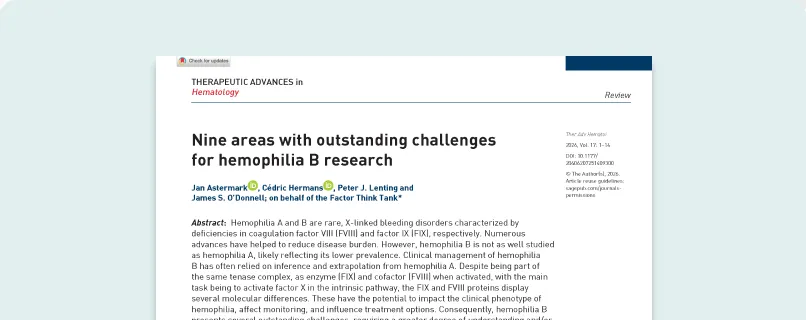
Outstanding Challenges in Haemophilia B Research
Astermark et al. Ther Adv Hematol 2026
-
Updated
Episode 1. Synovitis Definition and Pathophysiology
Listen to the podcast
-
Updated
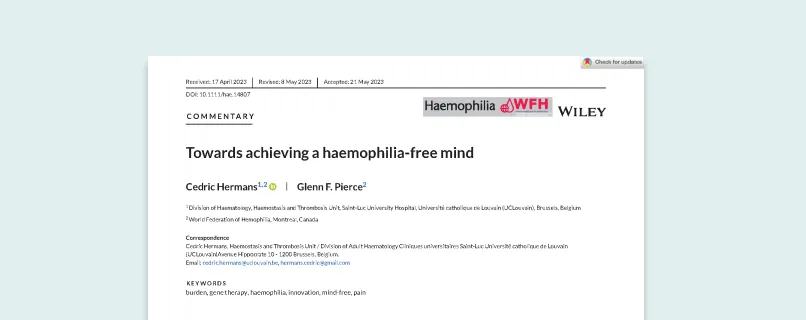
Towards Achieving a Haemophilia-free Mind
Hermans et al. Haemophilia 2023
-
Updated
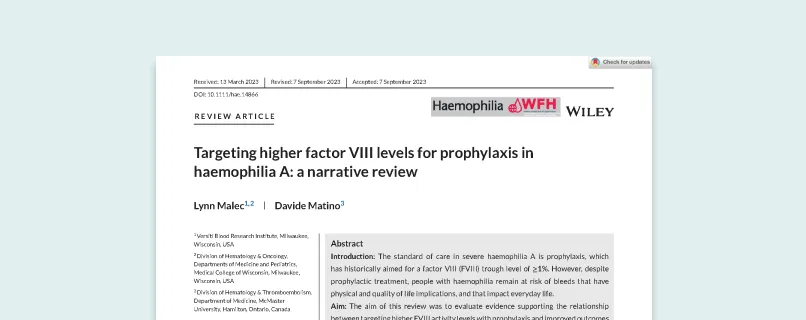
Targeting Higher FVIII Levels: a Narrative Review
Read the Malec et al. Haemophilia 2023 publication
-
Updated
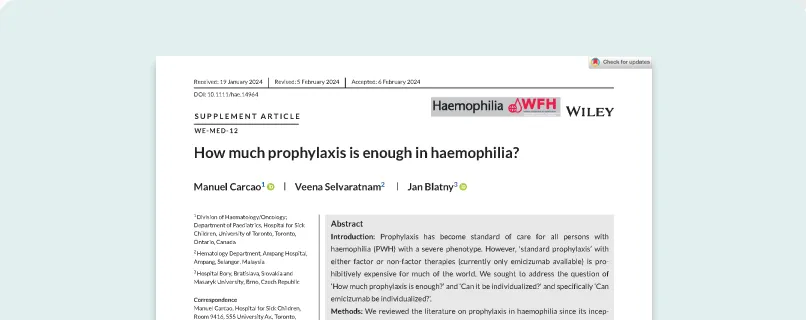
How Much Prophylaxis is Enough in Haemophilia?
Carcao et al. Haemophilia 2024
-
Updated

The Joint Health Insight Tool
Modelling the impact of bleeds on joints