
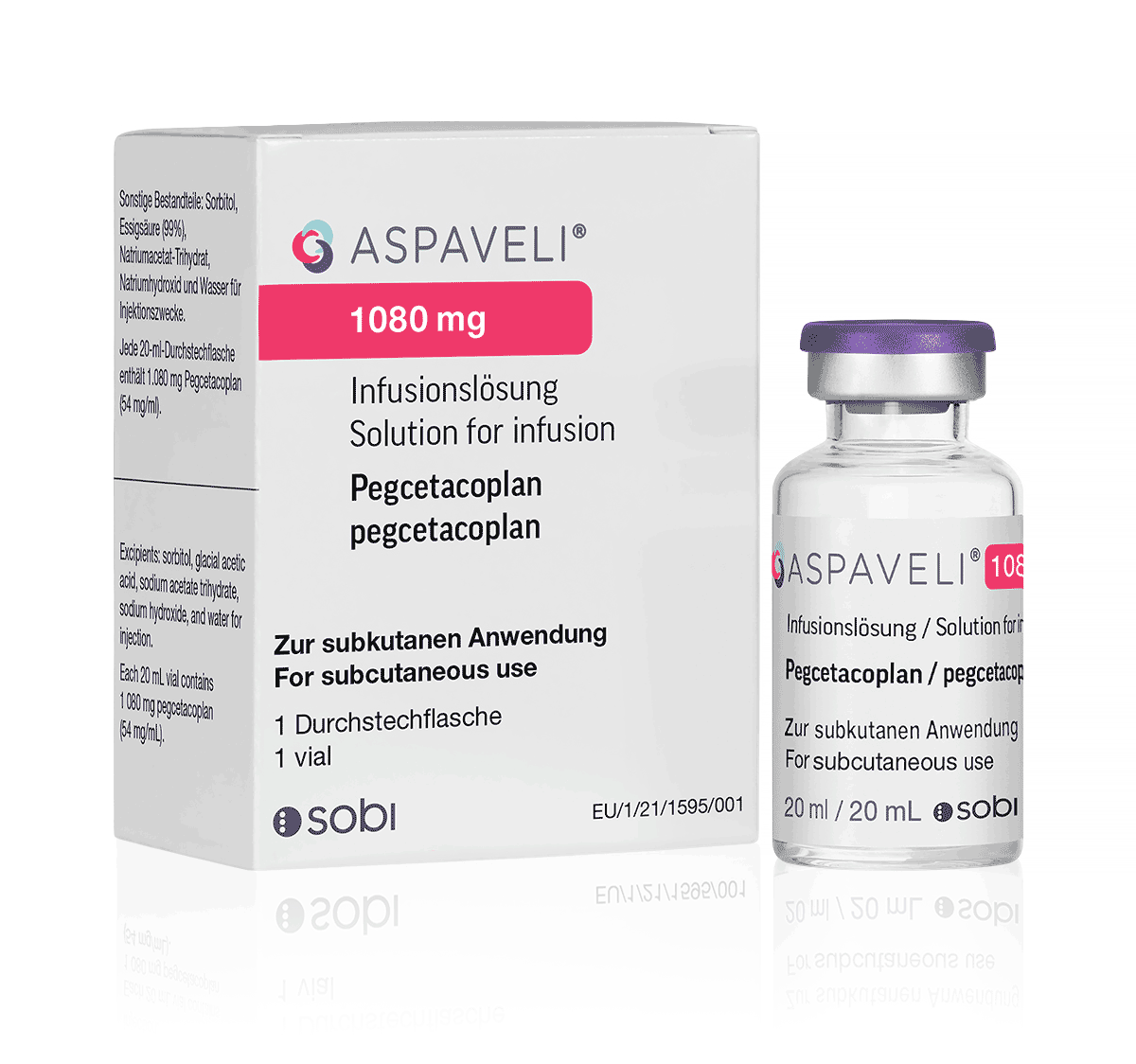
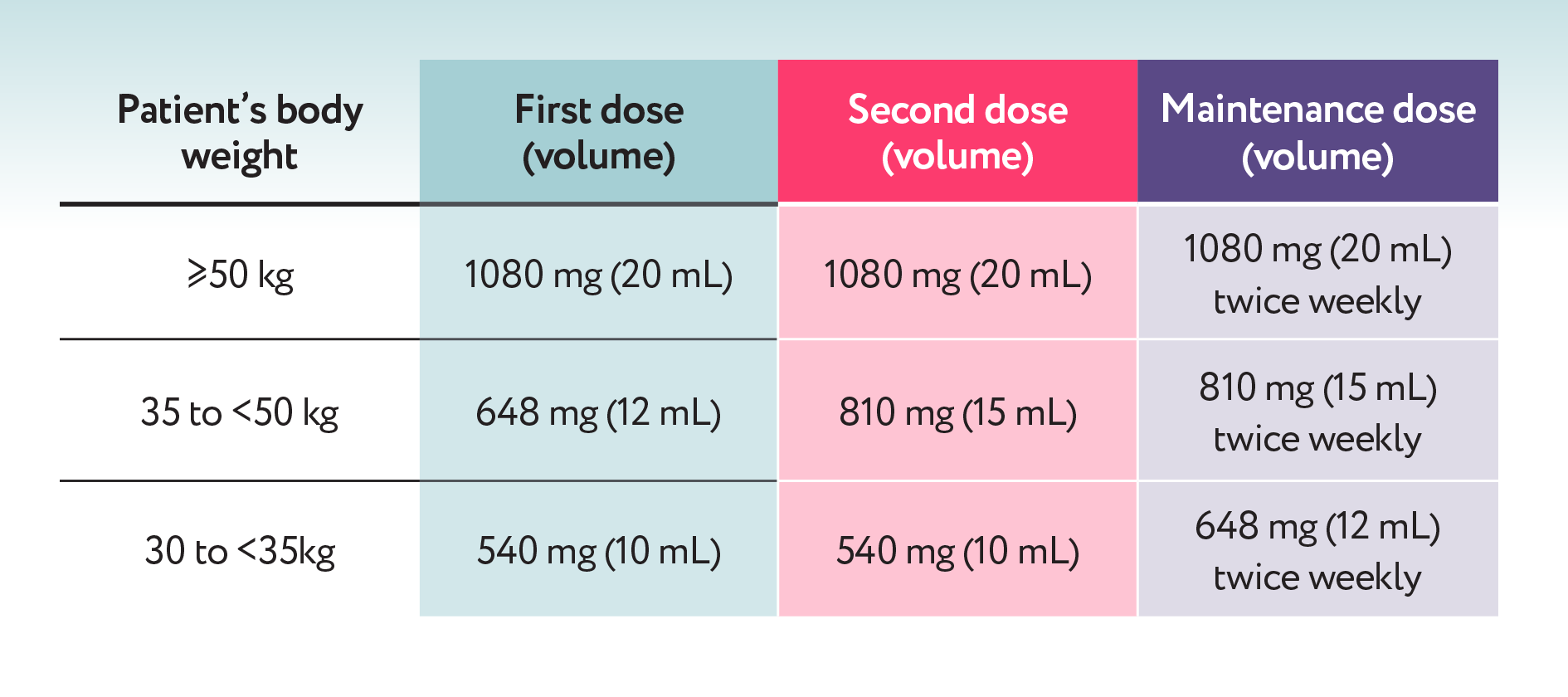
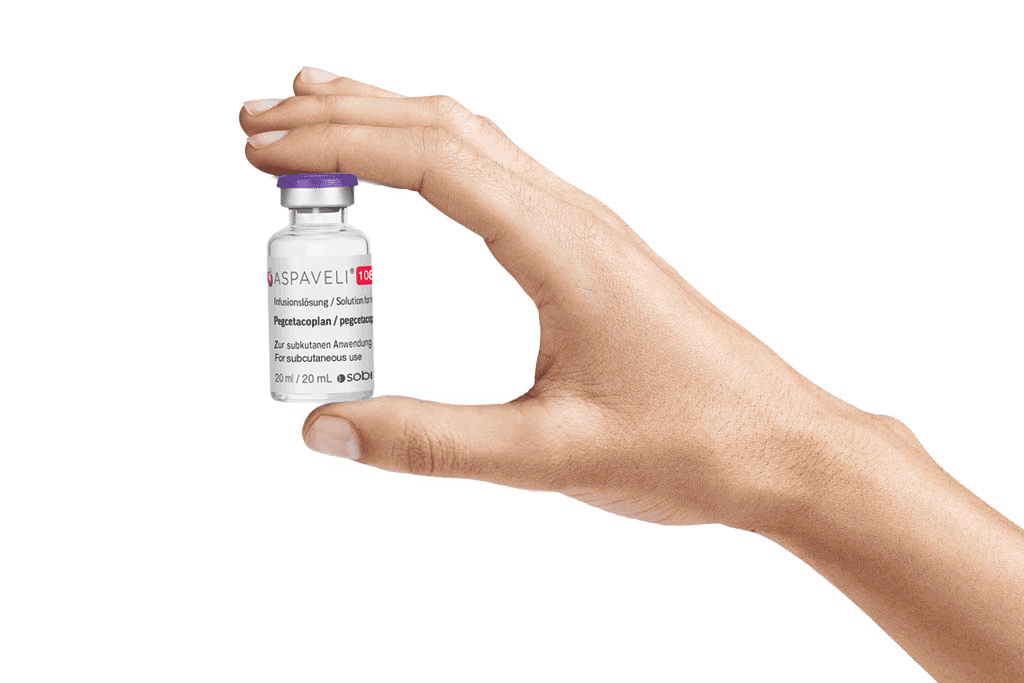
ASPAVELI should only be administered via subcutaneous administration using a commercially available syringe system infusion pump:1
- Aspaveli® should be infused in the abdomen, thighs, hips, or upper arms
- Infusion sites should be at least 7.5 cm apart from each other.
- The infusion sites should be rotated between administrations.
- The infusion time is approximately 30 minutes (if using two sites) or approximately 60 minutes (if using one site).
Initial doses of Aspaveli® should be administered by healthcare professionals in experienced treatment centres.1 If treatment is well tolerated self-administration and home infusion should be considered.1
The decision of a possibility of self-administration and home infusions should be made after evaluation and recommendation from the treating physician.1
Duration of Treatment
C3G and primary IC-MPGN are chronic diseases.
Discontinuation of this medicinal product is not recommended unless clinically indicated.1
Physicians should consider close monitoring to prevent disease relapse.3

EMA indication:
ASPAVELI® is indicated for the treatment of adult and adolescent patients aged 12 to 17 years with C3 glomerulopathy (C3G) or primary immune-complex membranoproliferative glomerulonephritis (IC-MPGN) in combination with a renin-angiotensin system (RAS) inhibitor, unless RAS inhibitor treatment is not tolerated or contraindicated.1
| For the full EMA Aspaveli SmPC, please click here |
▼This medicine is subject to additional monitoring. This will allow quick identification of new safety information. Healthcare professionals are asked to report any suspected adverse reactions via their national pharmacovigilance reporting system. Suspected adverse reactions should also be reported to Sobi via email at [email protected].
Abbreviations
C3, complement 3; C3G, C3 glomerulopathy; eGFR, estimated glomerular filtration rate; IC-MPGN, immune complex-mediated membranoproliferative glomerulonephritis; KHI, Kidney Health Initiative; RAS, renin-angiotensin system; uPCR, urine protein-to-creatinine ratio.
Footnotes
*There is limited experience with the use of Aspaveli in patients with recurrent C3G or primary IC-MPGN after transplantation in clinical studies.1
References
Aspaveli EMA Summary of product characteristics. Swedish Orphan Biovitrum AB (publ) January 2026.
Nester CM, et al. Clin J Am Soc Nephrol 2024;19:1201–8.
Vivarelli M, et al. Kidney Int 2024;106(3):369–91